You Should Experience Life in Denali, Alaska at Least Once
Denali ended up on our winter list for a reason that feels almost too ordinary to explain, but it’s the honest one. Years ago, back when I still worked in IT, a coworker told me about spending nights outdoors in real cold, not as a stunt, but as a way to learn what you actually…
Denali ended up on our winter list for a reason that feels almost too ordinary to explain, but it’s the honest one. Years ago, back when I still worked in IT, a coworker told me about spending nights outdoors in real cold, not as a stunt, but as a way to learn what you actually rely on when comfort is stripped away.
That story sat in my head for a long time, and once Amanda and I started living on the road, it kept resurfacing, especially on the quiet nights when the van felt like a small island in a big world.
So we chose the Denali National Park area because it’s interior Alaska cold, the kind that can swing hard, and it’s also a place built for winter visitors who still want a wild landscape instead of a city winter dressed up as adventure.
The park even notes that winter temperatures can range widely, from mild to brutally cold, and that warning is not dramatic, it’s practical.
December Plans, January Truth
We planned this for December at first. Amanda said, very confidently, “December is often the coldest month.” We shifted the plan to January thinking we were making a safer choice, and then we arrived and realized how funny that logic was in Alaska.
January is commonly described as the coldest month in the area. In nearby Healy, January averages around 12°F high and -7°F low (about -11°C / -22°C), which matches the kind of cold we felt in our hands and cheeks the moment we stepped outside.
Denali’s own park statistics list an average January temperature of about 2°F (-17°C) at park headquarters, which explains why the cold felt constant rather than occasional.
The part that still surprises me is how the cold behaves. It doesn’t only feel freezing. It feels dry, sharp, and quiet, like the air has edges.
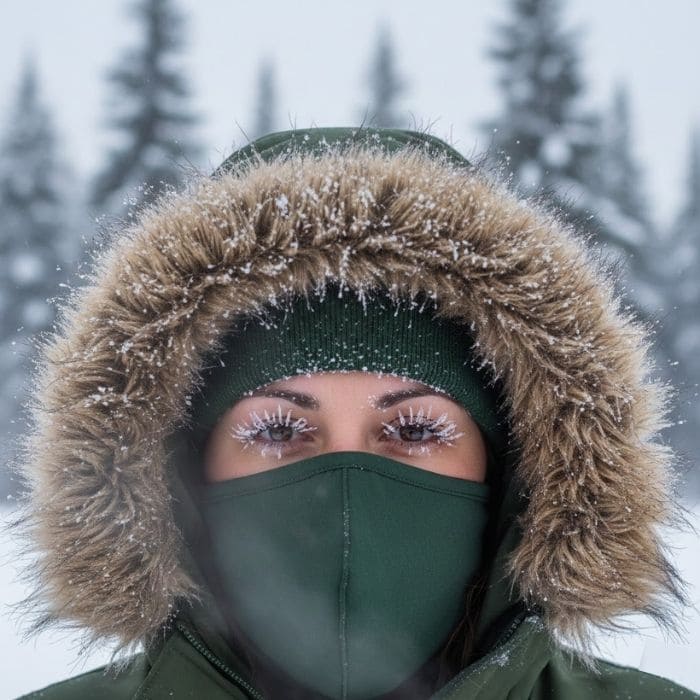
Your breath thickens the moment you exhale, your eyelashes start collecting tiny crystals if you stay out long enough, and your fingers get clumsy fast if you are not paying attention.
The Scenery Was Almost Too Perfect
If the weather was harsh, the view was the opposite. Denali winter made the world look polished and immense at the same time.
The snow wasn’t just on the ground. It covered everything in layers that softened the landscape, rounding off edges and turning the simplest shapes into something elegant.
The boreal forest near the park entrance looked dusted instead of buried, with dark trunks and branches outlined in white, and small animal tracks threading between trees like handwriting.
In the distance, the Alaska Range sat like a wall of pale stone and shadow, and the light had that winter quality where the sun never feels fully overhead, so everything stays gently contrasted, never harsh, never flat.
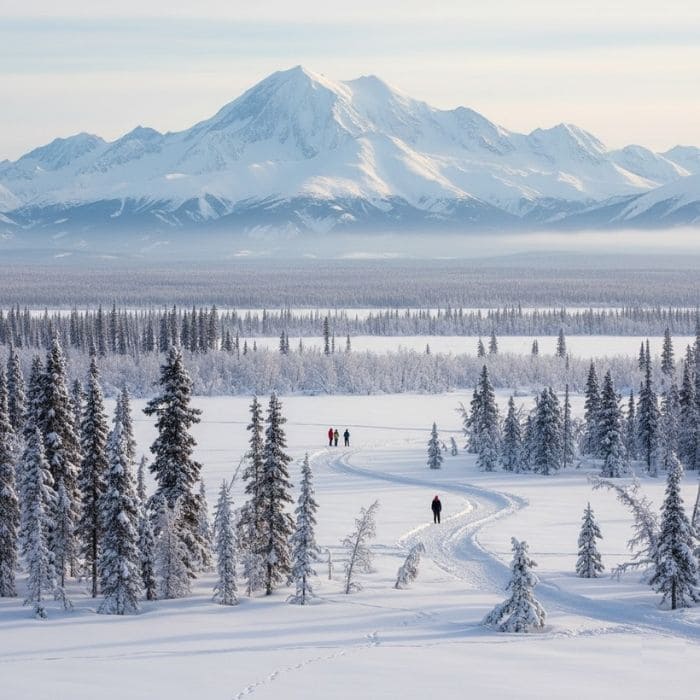
What stood out most was the space. Denali winter space feels larger than normal space. It’s the kind of openness where you can see far, hear very little, and start noticing small details that would disappear in a crowded place.
There were fewer people than I expected, which made every person you did see feel like part of a quiet agreement. Everyone moved slower, spoke softer, and looked around more.
We spent hours just standing and walking, not rushing to the next activity, because the landscape kept giving us new angles of the same beauty.
Denali itself describes winter as a season of big temperature swings and variable snow conditions, which somehow makes those calm moments feel even more precious because you know they can change quickly.
Tent Setup in Extreme Cold, The Part That Changes Your Mindset
Calling it “camping” doesn’t feel accurate. Setting up a tent in deep cold is closer to building a small system for the night.
We picked a spot that felt sheltered from wind and as level as possible, because wind is what makes cold feel aggressive. Then we treated warmth like something you design, not something you hope for.
The biggest difference came from two ideas that sound simple until you live them: keeping the sleeping area dry and insulating the ground under you so you stop losing heat downward all night.
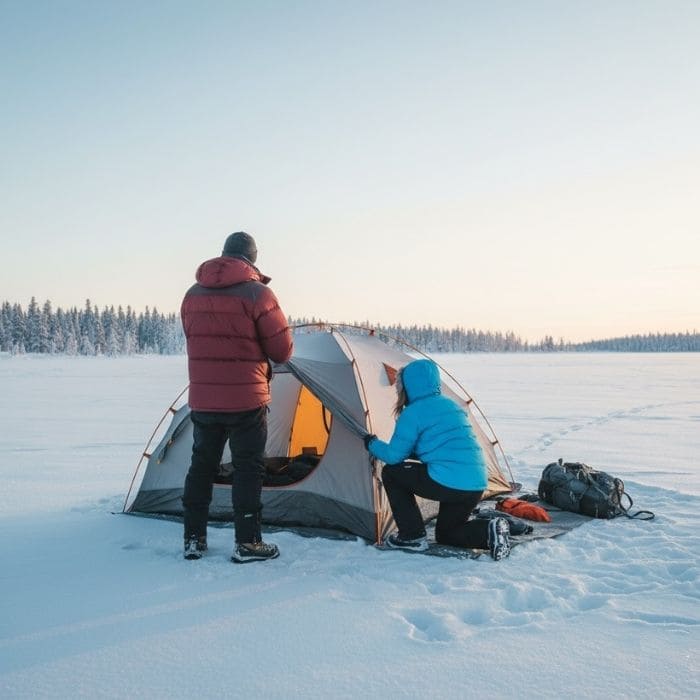
We also learned that organization is warmth. If your gloves are buried, your zipper is stuck, or you are rummaging around in the dark, you spend longer exposed, and those minutes add up.
We kept what we needed close, we set up before we were exhausted, and we made the tent feel like a small, calm space instead of a messy storage unit.
If someone wants to try this, the safest advice I can give is not a gear list, it’s a mindset. Treat cold like a serious environment, keep your plan simple, and check local conditions through official park sources before doing anything outdoors.
Denali’s National Park Service pages emphasize being prepared for a wide range of winter conditions.
Skiing, Plus the Expensive Mistake We Made
We could not come all the way to the Denali area in winter and skip snow time. Skiing felt like the perfect way to interact with the landscape instead of only watching it.
Here’s the part I almost didn’t want to admit because it was such a rookie moment: We forgot gear.
Not the small stuff. We forgot the kind of gear you don’t just “make work,” and it forced us into rentals. By the time we sorted it out, we were paying the kind of day-rate that makes you realize how quickly small mistakes become expensive in tourist-season winter towns.
Rental prices vary by location, but to give readers a realistic benchmark, ski and snow gear rentals in Alaska commonly run roughly $40 per day per person, depending on what you’re renting and where.
That sounds manageable until you multiply it by two people, add extra days, and realize you could have put that money toward your own basic setup.
My advice from this mistake:
Before you head into a winter destination, write a one-page cold gear checklist and treat it like you treat your passport.
If you own the basics, pack them. If you don’t own them, check rental availability and prices ahead of time so you don’t get stuck paying whatever the counter tells you when you’re already committed.
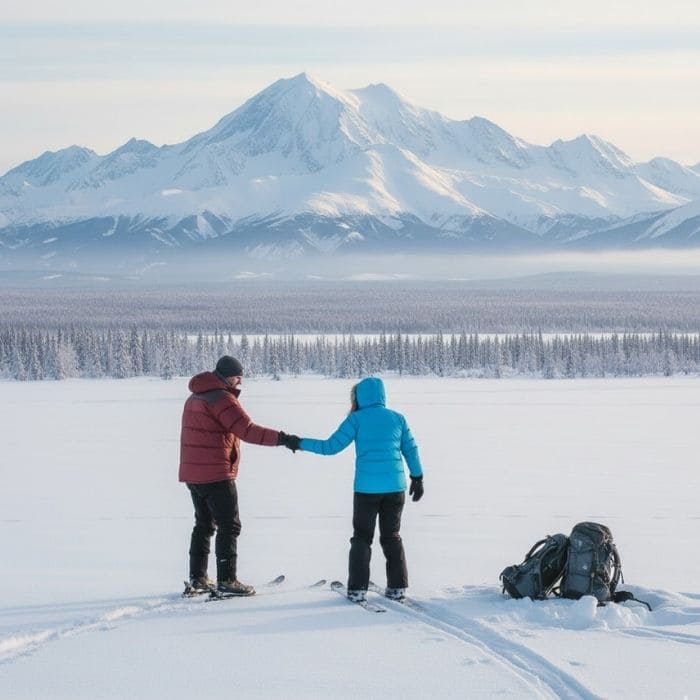
Now the sweet part. I can ski. Amanda couldn’t, at least not confidently. Teaching her felt strangely personal, because it wasn’t only about technique, it was about patience, encouragement, and letting her fail without making it heavy.
She fell, laughed, got up, fell again, and then had that one moment where the movement clicks and she glides for a few seconds with wide eyes like she just discovered a new part of herself.
I held her hand on the flatter sections, coached her through turns, and kept my voice calm even when I wanted to over-explain.
It felt like the early days of our marriage in a way I didn’t expect, back when we were learning each other’s rhythms and realizing love isn’t only the big moments, it’s the small ones where you choose kindness again and again.
Dinner Was the Most Surprising Part
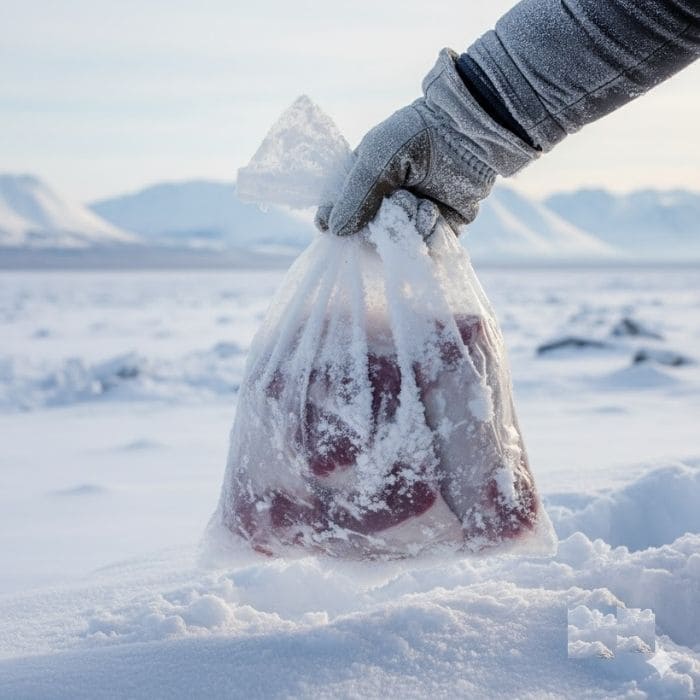
That night, dinner became the moment I remember most clearly. I had read a lot about how people in freezing climates use the environment to help preserve food. It made me wonder something I actually said out loud to Amanda while we were unpacking supplies.
If it’s this cold outside, do people here even need a fridge, and if I were selling appliances, would anyone buy one?
Modern homes still use fridges because indoor heating changes temperature reality fast, but the idea is still interesting. In true winter conditions, the outdoors can behave like temporary cold storage, and it changes how you think about food, timing, and waste.
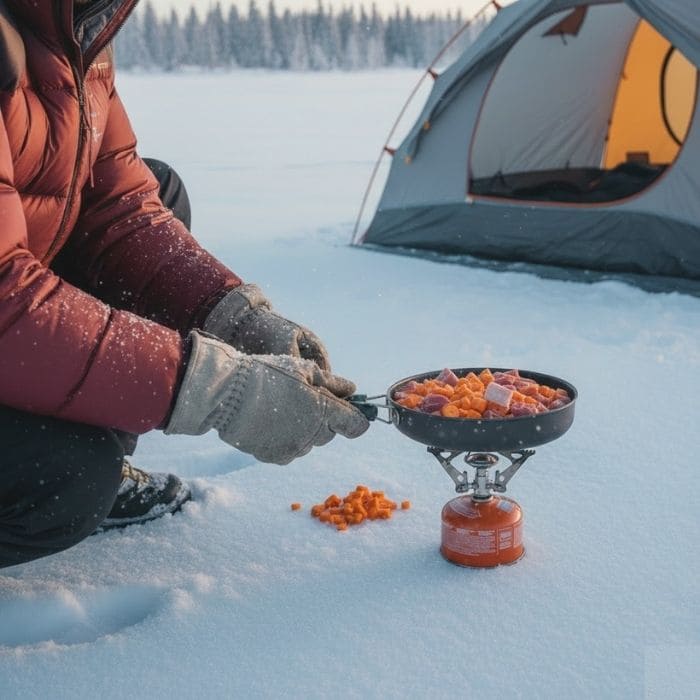
I cooked a simple mutton and potato skillet because I wanted something filling that wouldn’t require a lot of steps.
I used:
- mutton
- potatoes (cut small so they cook faster)
- carrots (for sweetness and texture)
- salt and pepper
- a small pinch of dried herbs we keep in the van, nothing fancy, just enough to make it feel like a real meal
I heated a pan, browned the beef first, then added the vegetables with a little water so it could steam and soften without burning.
Once everything cooked through, I let it sit for a minute with the lid on so the heat stayed trapped. That little pause mattered, because in extreme cold, food cools down fast, so you learn to keep your steps efficient.
We ate inside the tent, close together, hands wrapped around warm mugs afterward, and it felt like winning something small and meaningful. Outside was silence and frost. Inside was steam, warmth, and the kind of tired that feels earned instead of drained.