The Evening We Got Stuck at Piegan–Carway
Piegan-Carway felt like the right choice at the time, because after months on the road, Amanda and I had learned to avoid places that felt rushed or crowded, and this border crossing promised something gentler, a quieter transition between countries, surrounded by open land instead of concrete and traffic. The drive toward it reinforced that…
Piegan-Carway felt like the right choice at the time, because after months on the road, Amanda and I had learned to avoid places that felt rushed or crowded, and this border crossing promised something gentler, a quieter transition between countries, surrounded by open land instead of concrete and traffic.
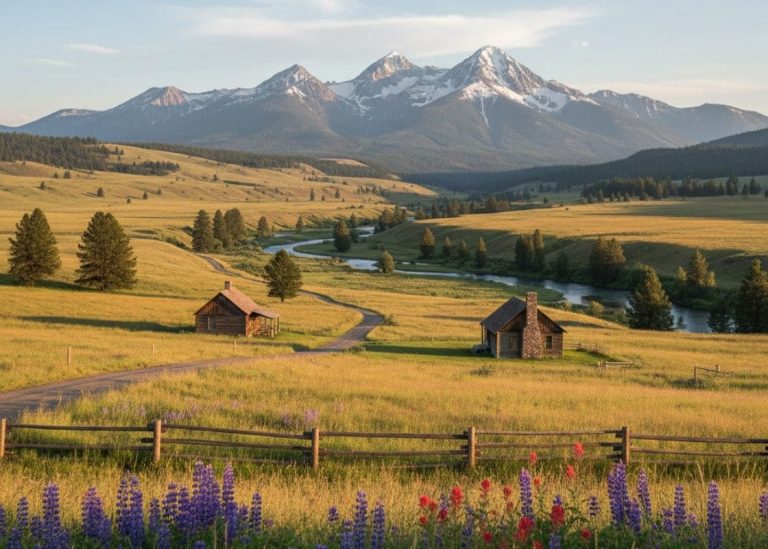
The drive toward it reinforced that idea at first, with the prairie spreading endlessly on both sides of the road, fences appearing and disappearing into the distance, and a sky so wide and pale that it made everything else feel small, and while that openness had felt calming earlier in the day, I realize now that it was also quietly removing every safety net we usually take for granted.
The Border That Didn’t Move
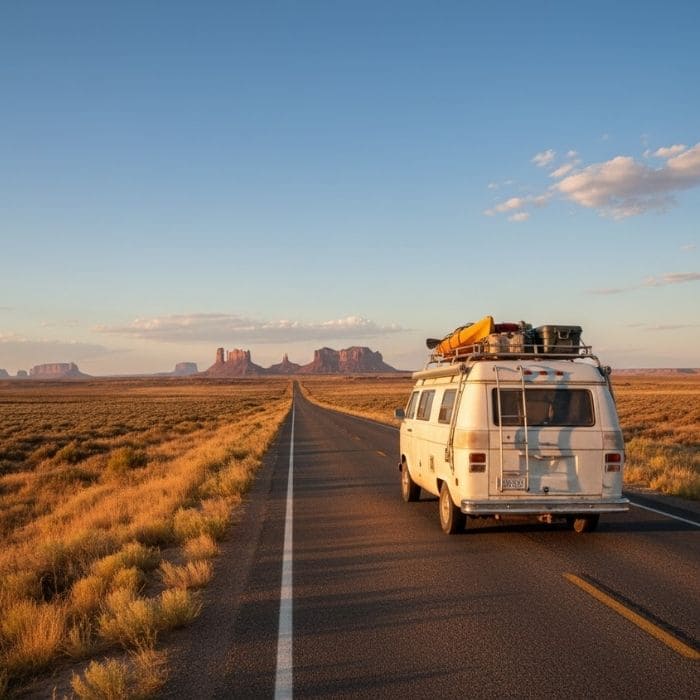
When we arrived, the station looked almost fragile against the landscape, a modest building, a flag moving lazily in the wind, and no visible signs of life beyond its function, and when we were told to wait, it felt ordinary enough that neither of us questioned it.
Minutes passed, then more minutes, and the stillness began to stretch uncomfortably, because there were no other cars pulling in, no engines starting or stopping, no small signals to reassure us that time was moving in a shared way.
When I turned the van off to conserve fuel, the silence became complete in a way that made the space feel suddenly much larger.
When Daylight Slipped Away
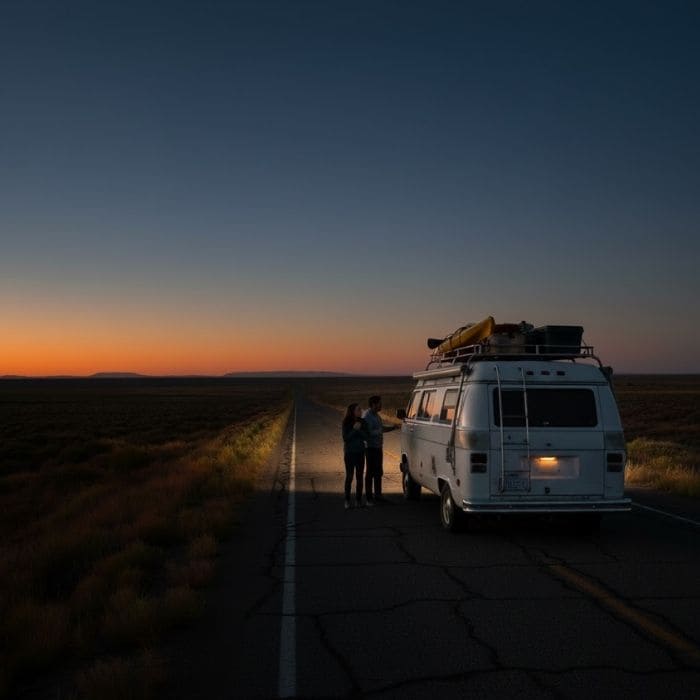
As the sun lowered, the change in the landscape was immediate and unsettling, with the light thinning quickly, shadows stretching across the prairie like long fingers, and the temperature dropping in a way you could feel through the van’s walls.
By the time it neared six in the evening, the sky had begun to darken into that flat, cold blue that comes before night fully arrives, and that was when Amanda’s calm started to crack, because daylight offers reassurance even when nothing else does, and losing it in a remote place changes how your body reacts before your mind catches up.
She asked what would happen if the station closed, if no one came back, if we were expected to stay there overnight without knowing how long the wait would last, and those questions carried weight because we both knew how far we were from towns, from help, from anything resembling normal infrastructure.
Fear Without Electricity, Without Noise, Without Distraction
What made the fear sharper wasn’t just being stuck, it was the absence of everything we associate with safety, because there were no streetlights flickering on, no nearby buildings glowing in the distance, no hum of traffic to remind us that people were close.
There was no electricity outside our van, no artificial light cutting through the darkness, only the slow fading of the sky and the wind moving across open land, and that kind of darkness doesn’t feel empty, it feels watchful, because your senses start filling in gaps whether you want them to or not.
Amanda whispered that she didn’t like how exposed we were, and I understood exactly what she meant, because we’ve traveled through many remote places before, deserts, forests, mountains, but this felt different, flatter, more open, with nowhere to hide if something went wrong.
We had heard stories over the years about isolated border areas, about theft, about people taking advantage of travelers who didn’t have many options, and even though nothing concrete was happening, fear doesn’t need proof when you’re tired, cold, and sitting in the dark with nothing but your thoughts.
The chill that ran through me wasn’t from the temperature alone, it was that quiet tightening in the spine that comes when your brain starts cataloging worst-case scenarios, and I had to consciously stop myself from feeding that loop, because fear grows fastest when it’s shared unchecked.
Becoming the Calm When There Is None
I knew in that moment that if I let my own anxiety show, it would amplify Amanda’s fear, so I did the one thing I’ve learned matters most on the road, I slowed everything down.
I spoke evenly, not cheerfully, not dismissively, but steadily, walking us through what we actually knew instead of what we imagined, reminding her that we were not powerless, that the van was locked, that we had enough fuel, enough food, enough water, and that we had handled worse nights in harsher environments.
We made the van feel smaller and safer by closing the curtains completely, reducing the sense of exposure, and I turned on a soft interior light so the darkness outside couldn’t creep in visually, because fear often begins with what you can’t see.
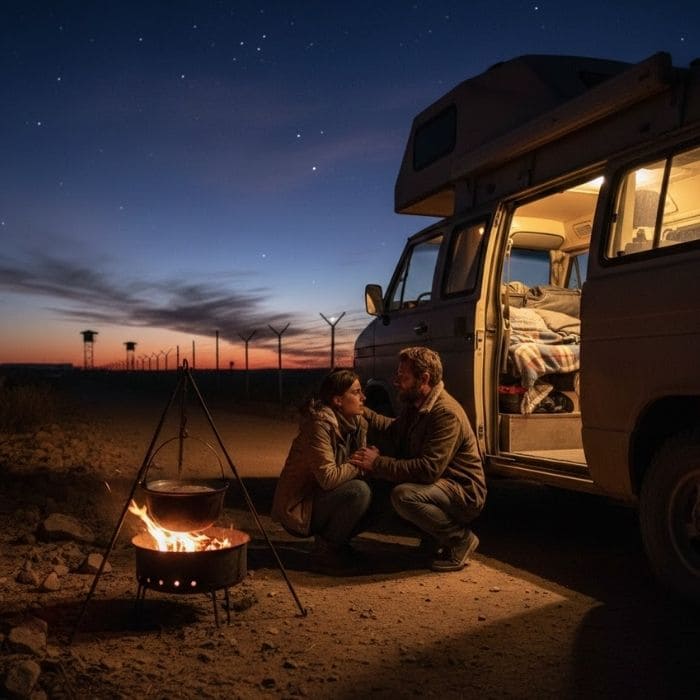
I warmed simple food, not because we were hungry, but because warmth has a way of convincing your body that it is being cared for, and I handed Amanda a mug and waited until her shoulders lowered slightly before saying anything else.
Outside, the prairie disappeared into darkness, and the wind became louder simply because there was nothing else competing with it, and I stayed awake longer than usual, listening, watching, reminding myself that calm is not the absence of fear, it’s the decision not to let fear take control.
A Long Night of Listening
That night felt longer than it probably was, not because anything happened, but because nothing did, and in places like this, stillness can be heavier than action.
Every sound felt magnified, the wind brushing against the van, a distant noise that might have been an animal or just air moving across grass, and Amanda flinched more than once before slowly settling again, trusting me to stay alert while she rested.
It struck me then that remote travel doesn’t test your strength or courage as much as it tests your ability to stay present when your environment offers no reassurance, and I understood why people avoid places like this, not because they are dangerous, but because they force you to confront how much comfort modern life quietly provides.
Morning, and the Release of Tension
When morning finally arrived, it did so gently, the darkness thinning into pale light that revealed the same prairie we had watched disappear the night before, now harmless and still, as if the fear belonged only to the dark and not the land itself.
Amanda sat up and looked outside for a long time before speaking, and the relief on her face told me how deeply the night had affected her, even though nothing visible had gone wrong.
Not long after, a vehicle arrived, one of the first we had seen since the previous afternoon, and the man who stepped out greeted us with an ease that immediately softened the tension we’d been carrying, asking if we were alright as if this were a normal morning conversation.
He explained calmly that delays here can stretch unpredictably, especially with staffing and timing, and he shared small, practical advice about how to handle nights like this better, where to position your vehicle to reduce wind exposure, how to conserve energy without sitting in the cold, and why arriving earlier in the day matters more at remote crossings than distance itself.