Our Special Visit to Wadmalaw Island, the Tea Place That Won Me Over
Back when I was still working IT, tea was a small luxury that helped me survive long days, especially when deadlines stacked up and the only quiet moments came in the space between meetings. So I went through phases of trying the good stuff from Asia, Japanese greens, Taiwanese oolongs, Chinese black teas, and even…
Back when I was still working IT, tea was a small luxury that helped me survive long days, especially when deadlines stacked up and the only quiet moments came in the space between meetings.
So I went through phases of trying the good stuff from Asia, Japanese greens, Taiwanese oolongs, Chinese black teas, and even the occasional ceremonial-style matcha that made me feel like I was borrowing calm from another world for ten minutes at a time.
For years, Japan sat in my head as the ultimate tea dream, but the funny thing about nomadic life is that it keeps proving to me that the best place is sometimes the one that meets you at the right moment, not the one that looks perfect on a bucket list.
That’s how we ended up on Wadmalaw Island, South Carolina, after a beach morning that started at Folly Beach, where the air tasted like salt and sunscreen and the tide had that soft, rhythmic sound that makes you walk slower without meaning to.
By the time we were brushing sand off our ankles and heading back toward the van, I pulled up the pin I’d saved and told Amanda, almost casually, that the tea garden was nearby.
She checked the route, looked at the time, then looked back at me with that grin that means she’s already convinced: it was roughly an hour and a half away, close enough that it felt like a gift instead of a plan.
The Drive In, and the First Sight of the Fields
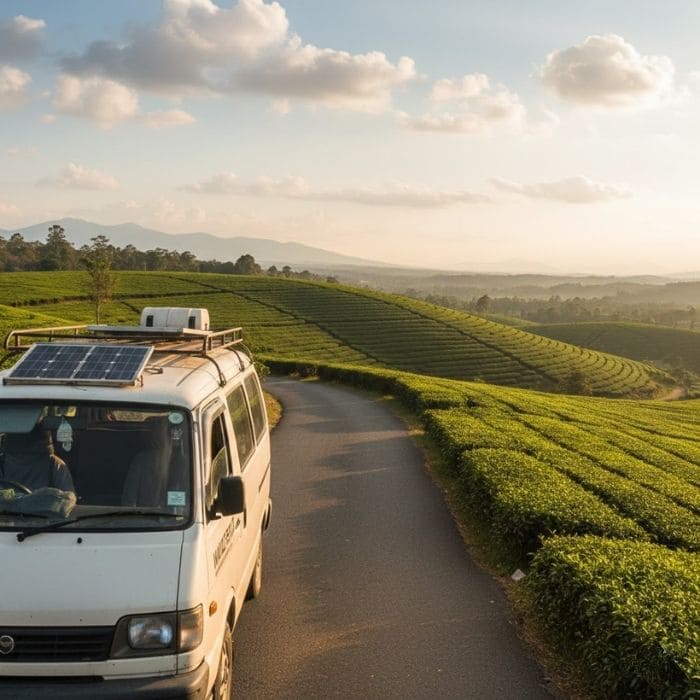
When we pulled into the Charleston Tea Garden, the first thing I noticed was how calm the place felt, even before we saw the fields clearly, because there was no pressure in the air, no rush, just open space and that faint, clean plant scent that I can only describe as green and slightly sweet, like fresh-cut leaves warmed by early sun.
Then the tea rows came into view, and I understood why people describe it as endless, because the bushes sit low and dense, trimmed into long, tidy lines that stretch across the land with a kind of quiet order, and it doesn’t look like a decorative garden, it looks like a working farm that happens to be beautiful.
The garden spans about 127 acres and grows Camellia sinensis, the same tea plant used worldwide for green and black tea.
They talk openly about how the island’s sandy soil, rainfall, and subtropical conditions help tea thrive here, which made me appreciate that this wasn’t an imitation of tea culture, it was tea culture shaped by South Carolina’s own climate.
Where We Parked, and the People Who Made It Feel Real

We parked in a simple gravel area, the kind that fits pickup trucks and work boots more than polished tourism.
As we walked toward the entrance, a staff member greeted us with an easy friendliness, then asked if we wanted to start with the factory tour, because the best way to understand their tea is to see how it moves from leaf to finished product.
Our guide, Bill, introduced himself with a quick handshake, sun-worn skin, and that practical posture people get when they spend most of their time on a farm rather than behind a desk.
While I’m not going to pretend I caught every job title correctly, he spoke like someone who had repeated the same process thousands of times and still respected it, which is exactly the kind of energy I trust.
Harvesting Tea Leaves, the Way They Actually Do It Here
I’ll be honest: I pictured harvesting as quiet hand-plucking like the romantic photos from Japan, where someone carefully pinches the bud and two leaves, and that method is real in many parts of the world.
However, the Charleston Tea Garden is built for American scale and consistency, which means harvesting is typically mechanical, not because they don’t care, but because the farm is large and the harvest window matters.
They explained that the bushes are kept manicured and level so harvesting can be precise, and that the top layer of tender growth is what they’re after, because that’s where the best flavor lives.
One detail that stuck with me is that their tea plants are grown from clones rather than seeds to keep the flavor consistent from season to season, which is the kind of behind-the-scenes decision most visitors never think about, but it’s exactly the kind of thing that makes a cup taste the same in June and September.

The garden has used custom-built equipment designed specifically for tea here, something often described as a machine invented during the Lipton research era and refined into a farm-ready harvester that skims the top growth, collects it, and moves it toward processing quickly.
Since we arrived early, we were able to watch the morning rhythm begin, which looked less like a single dramatic harvest moment and more like a steady flow of work, with the rows being cut evenly, the fresh leaf matter moving into collection.
I picked up a small handful of leaves from a collection bin and felt how tender and flexible they were, then inhaled without thinking, because the scent was clean and grassy, almost like green beans and spring rain.
Inside the Processing Area
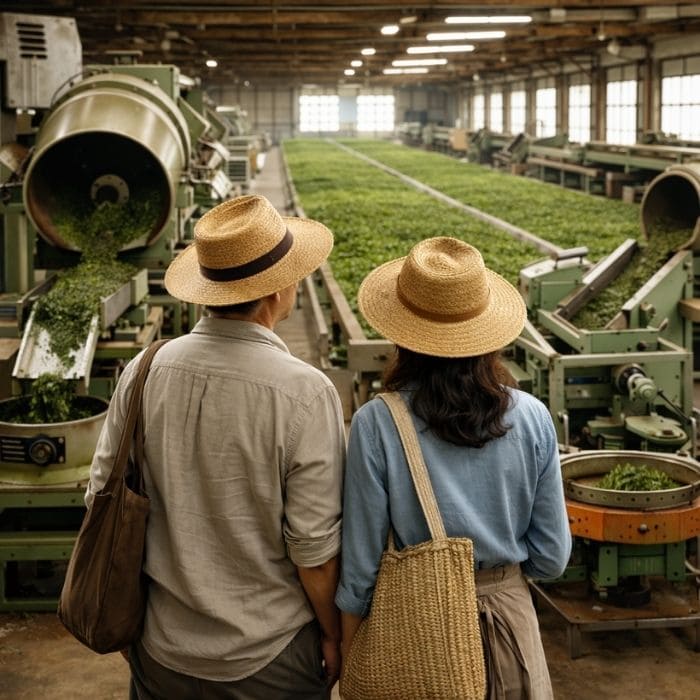
Bill walked us through the basic stages they use for black tea production, starting with withering, where freshly harvested leaves are laid out so moisture begins to reduce and the leaf softens, which makes it ready for the next step without bruising into bitterness.
One common description of their process is that leaves wither for roughly 12 to 18 hours, because the goal is texture and moisture control, not rushing.
After that comes the part most people vaguely call “oxidation,” and seeing it explained in plain, practical terms helped, because oxidation here isn’t mystical, it’s the controlled exposure that develops color and flavor, and the guide mentioned a window around under an hour for this stage in their typical flow, depending on conditions, because tea is one of those products where humidity and temperature quietly shape everything.
Then the leaves are dried thoroughly to stop the process at the right point, and I watched them describe drying like it was a discipline rather than a step, because too much moisture left behind means spoilage, and too aggressive a dry can flatten aroma, so the machines are doing heavy work, but the human judgment is what keeps it consistent.
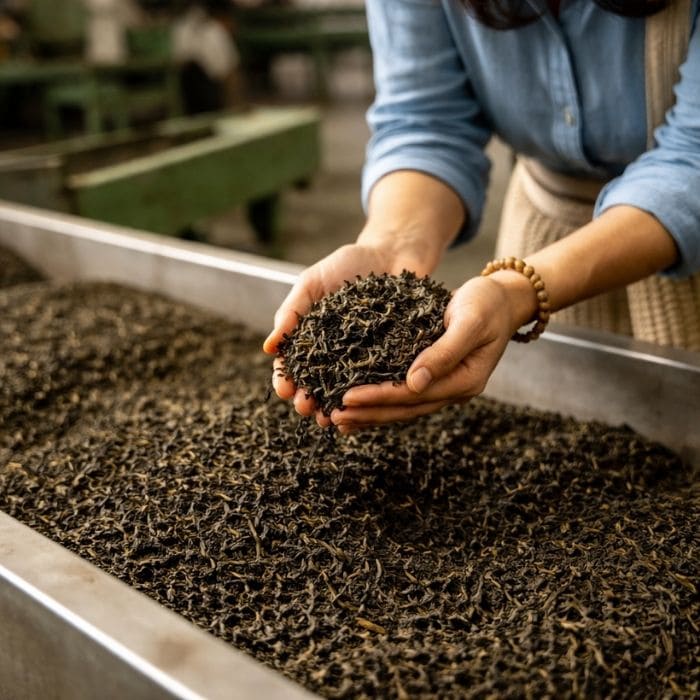
One small moment made me laugh, because it felt so farm real compared to the dreamy way tea is usually described: I picked up what I thought was a perfect-looking batch, complimented it.
But one of the workers smiled politely and said something like, “It’s good, but it wouldn’t pass our standard yet,” then pointed out tiny bits of stem and fiber mixed in that I hadn’t even noticed, explaining that part of their quality control is removing excess sticks and debris so the final tea is clean, consistent, and brews evenly.
The Tasting, and the Moment Tea Became My “True Love”
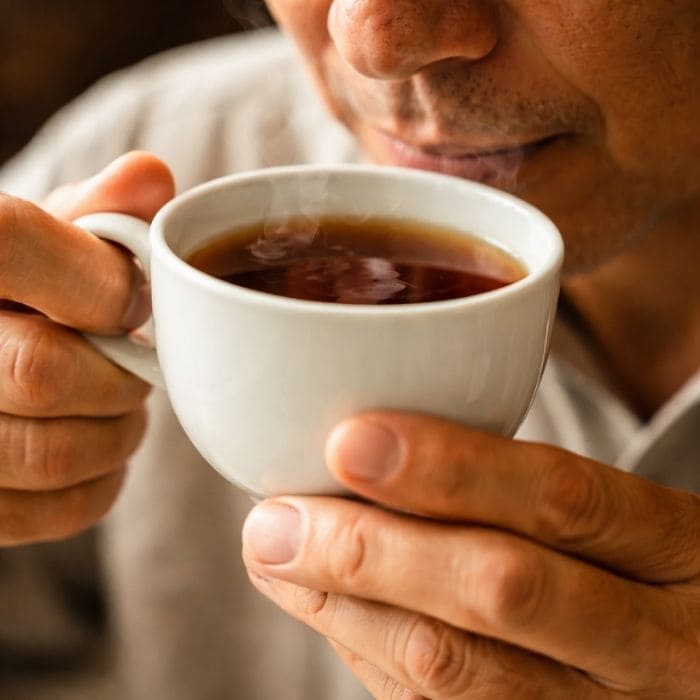
The first cup we tried was their classic black tea, and the aroma rose cleanly, not perfumy, not candy-sweet, but warm and gently malty, with a soft edge that reminded me of toasted grain and sun-warmed hay.
When I took the first sip, what struck me was the texture: it felt smooth, round, almost buttery on the tongue, without that sharp astringent bite that some black teas hit you with when they’ve been over-oxidized or brewed too hard.
Amanda’s reaction was immediate and very her, because she didn’t do a dramatic “wow,” she just closed her eyes for a second, then opened them and said, quietly, that this tasted like something you could drink every day without needing to convince yourself it’s special.
In my head, I couldn’t help comparing it to some of the Japanese and Chinese teas I used to chase, and the difference wasn’t better-versus-worse in a snobby way, it was personality: the Asian teas I loved often felt sharp, precise, and layered like a formal conversation, while this one felt approachable and grounded, like a friend who doesn’t need to prove anything to you, which is probably why it hit me so hard in this season of my life.
By the time we walked back past the rows, the tea bushes looked different to me, not like a pretty field, but like the beginning of a long, disciplined chain of choices.
That’s why I call this my true tea love now, because it didn’t feel like a fantasy, it felt like something real I could return to.