I Found Things Replacing Bowls and Plates
One of the strangest parts of van life is how a small inconvenience can push you toward a better solution. For me, it was dishes. We already had bowls, plates, knives, and forks in the van, but the constant cycle of washing, drying, and trying to store everything so it wouldn’t rattle or break started…
One of the strangest parts of van life is how a small inconvenience can push you toward a better solution.
For me, it was dishes. We already had bowls, plates, knives, and forks in the van, but the constant cycle of washing, drying, and trying to store everything so it wouldn’t rattle or break started to feel like a daily tax, especially on days when we were tired, low on water, and the last thing either of us wanted was a sink full of greasy plates.
This story happened on a warm late-spring afternoon on Highway 101, just south of Eureka, California, when Amanda and I were heading north toward the redwoods and a half-empty fridge that made us stop sooner than planned.
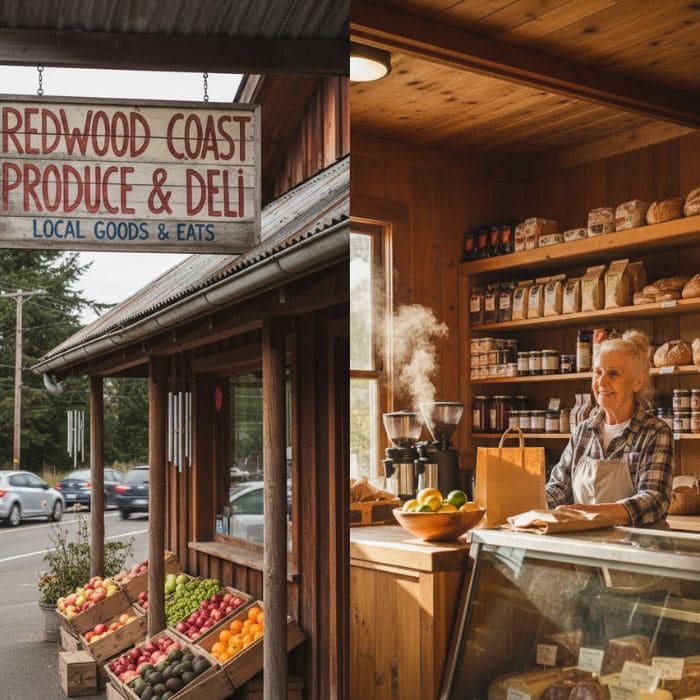
We pulled into a small roadside place called Redwood Coast Produce & Deli, one of those local markets that looks modest from the outside but always surprises you once you step in.
It had a hand-painted wooden sign, a few crates of fruit set out front, and a wind chime on the porch that kept tapping softly like the store was trying to stay relaxed even when the road traffic wasn’t.
Inside, it smelled like a mix of citrus, brewed coffee, and warm bread, and an older woman behind the counter greeted us like she already knew we were travelers.
“You in the van out there?” she asked, nodding toward the window.
I laughed. “Guilty.”
She introduced herself as Marilyn, and the way she spoke had that friendly Northern California tone where people are kind without being overly curious.
“You two look like you’ve been living off snacks,” she said, half teasing. “Get something real today.”

Amanda went straight for vegetables, bell peppers, onions, carrots, the usual van staples. I wandered toward the fruit, and that’s where I saw the bananas.
They weren’t in the usual loose pile like most grocery stores. They were wrapped in a broad green sheet, tied with twine, the whole bundle looking like it had been harvested and packed with actual care. A small sign above them read:
“Bananas, local supplier. Limited.”
I picked one bundle up, and my fingers automatically brushed the leaf wrapping. It was thick, smooth, and surprisingly sturdy, still cool like it had been sitting in shade.
Marilyn noticed immediately.
“Oh, that leaf’s good,” she said. “Don’t throw it away. People use those for cooking or serving.”
I Looked at Amanda and Said, “What If We Don’t Use Plates Tonight?”
Back in the van, we parked in a quiet turnout a few miles up the road where you could hear wind moving through the trees even with the engine off. It wasn’t a campground, just a safe pull-off spot that felt calm enough for a proper meal.
Amanda set the groceries down and sighed the way she always does after a store run, part relief, part tired.
“I’m starving,” she said. “But I’m also not in the mood to wash anything.”
I held up the banana leaf bundle like I was presenting evidence.
“What if we don’t use plates tonight,” I said.
She gave me that look that means she’s half intrigued, half preparing for chaos.
“You’re about to experiment,” she said.
“Just hear me out,” I replied, already reaching for the cutting board.
How We Actually Prepared the Banana Leaves
This is where I got surprisingly serious, because banana leaves are simple, but if you want them to feel clean and usable, you have to treat them properly.
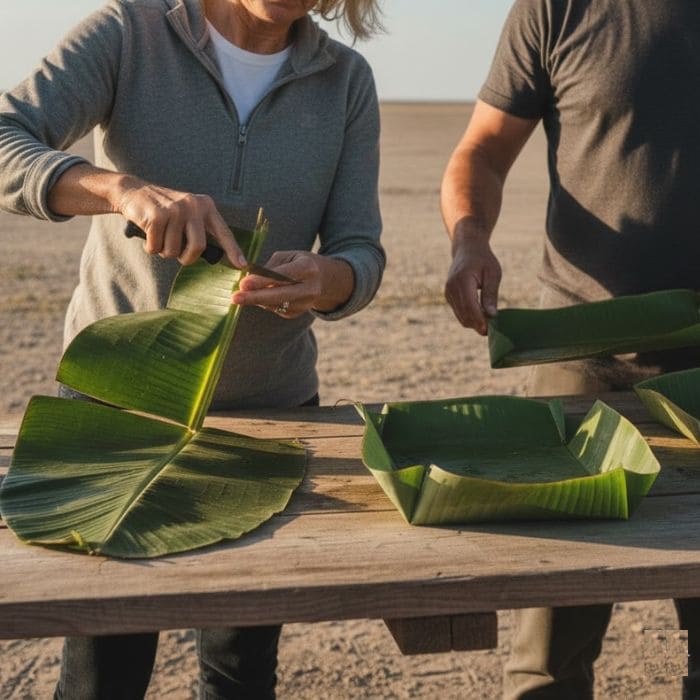
First, we rinsed the leaves with a small amount of water. Not soaking, just a clean wipe-down. Then Amanda pointed out that the leaf had a slightly stiff spine in the middle, so I trimmed it carefully so it could lay flatter.
The leaf texture was naturally waxy, which is exactly what makes it work so well as a plate. It resists moisture. It holds heat without collapsing. It doesn’t tear easily if you handle it gently.
I cut two large rectangles, each about the size of a dinner plate, and folded the edges up slightly like a shallow tray, which made it feel less like eating on a leaf and more like eating on something intentionally designed.
Amanda watched me fold it and said, “Okay… that’s actually kind of smart.”
The Meal: Curry That Felt Better on a Leaf Than in a Bowl
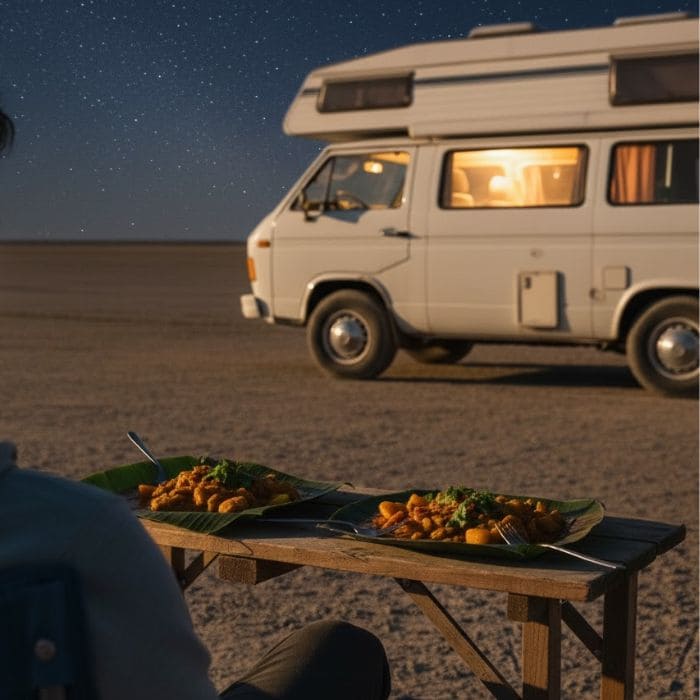
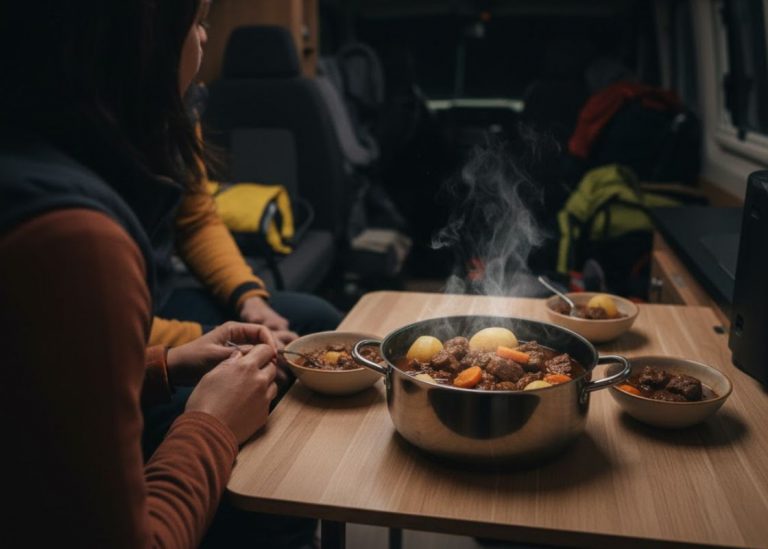
We cooked beef curry, because that night was cold enough to want warmth but not cold enough to stay inside the van with the windows shut. I browned beef in a small pan first, then added potatoes and carrots, letting them soak up the spices slowly while the van filled with that comforting smell that makes a cramped space feel like home.
When it was ready, Amanda spooned the curry directly onto the banana leaf “plates.”
The steam rose, and the leaf reacted in a way I didn’t expect. It softened slightly, not melting or breaking down, but relaxing, like it warmed into its role. The curry sat there beautifully, the colors brighter against the deep green surface.
We sat at the tiny table, and for a second the meal felt almost ceremonial, even though it was just two tired adults eating curry in a van.
Amanda took a bite, then paused.
“This tastes different,” she said.
I laughed. “No it doesn’t.”
She shook her head, stubborn as always when she’s sure about something.
“It does,” she insisted. “It feels different. Like… simpler. Cleaner.”
The Best Part: No Cleanup, No Smell, No Stress
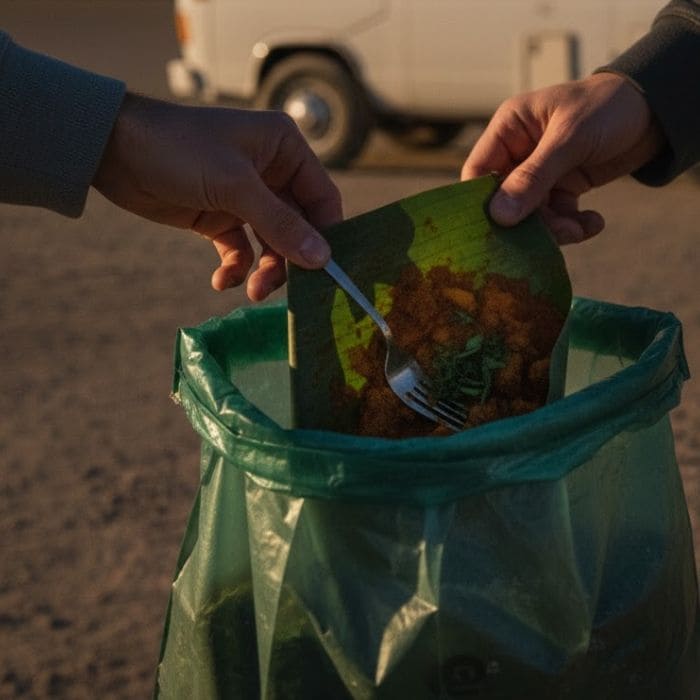
When we finished, the banana leaves had done their job perfectly. There was no greasy bowl sitting in the sink. No lingering curry smell stuck in plastic containers. No soap wasting water.
We folded the leaves inward, trapping any remaining sauce, and sealed them in a biodegradable bag until we could dispose of them properly later.
Amanda leaned back, full and relaxed, and said, “This might be your best van idea so far.”
Why This Became a Real Habit for Us
After that day, banana leaves became part of how we eat on the road, not every meal, but often enough that it changed our routine. Whenever we pass a market that sells bananas wrapped in leaves, or when we find banana leaves available at an Asian grocery store, we grab a bundle.
They’re light, they’re practical, they reduce dishwashing, and they make a meal feel oddly grounded, like you’re borrowing a method that humans used long before kitchens had cabinets.
It’s funny what becomes meaningful in nomadic life. Sometimes it’s a national park or a mountain range. Sometimes it’s a seven-dollar bundle of bananas wrapped in a leaf at a tiny market.