From Red Rocks to Salt Air: Letting the Road Decide
After Sedona, we didn’t stop to carefully plan the next destination the way we used to when travel had to fit into a work calendar. There were still so many places nearby that we hadn’t explored, and instead of feeling overwhelmed by options, it felt freeing. We kept driving, letting the road unfold while we…
After Sedona, we didn’t stop to carefully plan the next destination the way we used to when travel had to fit into a work calendar.
There were still so many places nearby that we hadn’t explored, and instead of feeling overwhelmed by options, it felt freeing. We kept driving, letting the road unfold while we talked, rested, and slowly recovered from days of climbing and long hours on our feet.
Somewhere along a quiet stretch of highway, Amanda looked up from her phone and asked a simple question that immediately made sense: What about a beach? Sedona had been beautiful, but our bodies were still holding onto soreness, especially her knees and my legs. Sand and water felt like the right counterbalance to red rock and elevation.
Choosing Puerto Peñasco
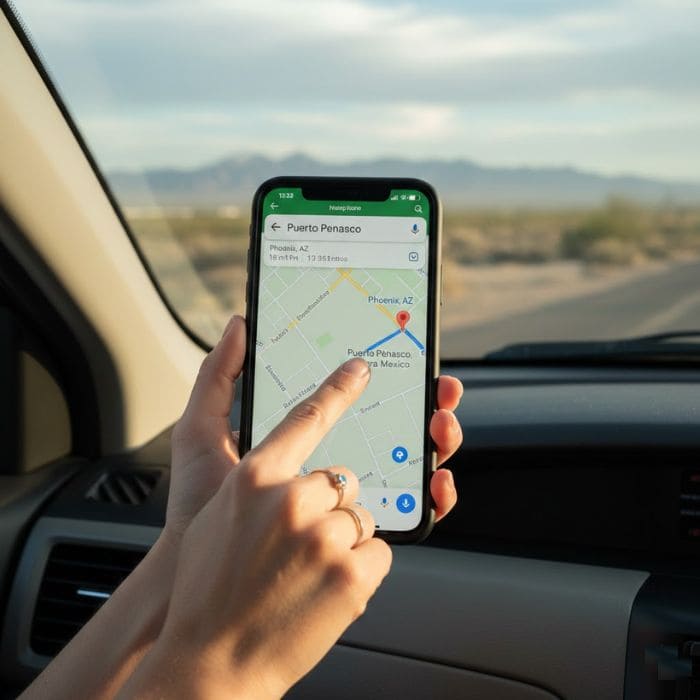
Amanda started searching on Google while I drove, scanning maps and reviews. From where we were, Puerto Peñasco (Rocky Point), Mexico showed up as a realistic option rather than a distant plan.
The drive from Sedona would take roughly six to seven hours, depending on stops and border timing, which felt manageable without turning the day into a test of endurance.
We first looked at nearby beaches with familiar names like Sandy Beach and Playa Bonita. They were clearly popular, full of resorts, restaurants, and organized activities.
While they looked beautiful, they also looked busy, and after the quiet of Sedona, neither of us wanted crowds or noise. We kept zooming out on the map, reading comments, and noticing areas with fewer reviews and less development.
That’s when places like Playa Encanto and Playa Miramar stood out. These areas still had access roads and basic amenities, but they were more open, less built-up, and clearly used by people who came to slow down rather than be entertained.
First Impressions of the Sea
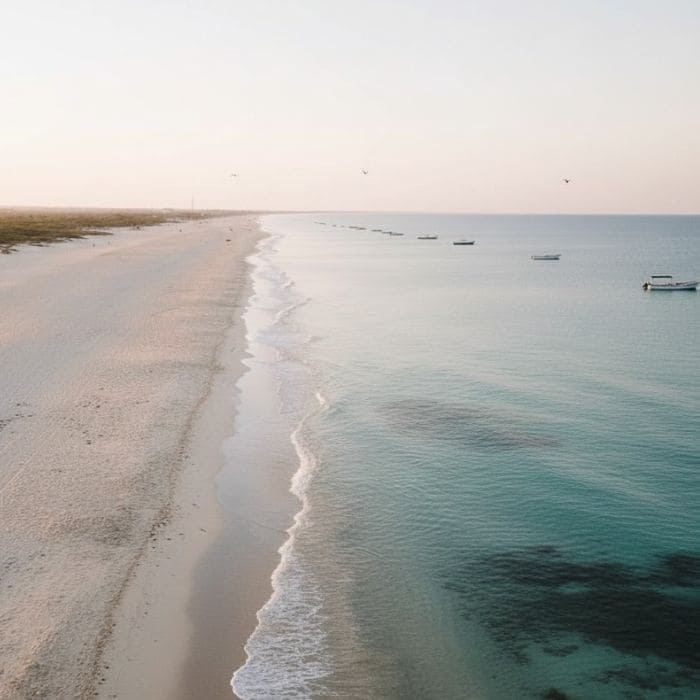
The moment we reached the coast, everything changed. After days surrounded by land, the openness of the Sea of Cortez felt almost unreal.
The horizon stretched wide, uninterrupted, and the light reflected off the water in a way that softened the entire landscape. The air carried salt instead of dust, and even the breeze felt gentler than what we were used to inland.
The sand was light in color and fine underfoot, cool in the morning and warming steadily as the sun climbed. The shoreline was wide enough that even when a few other people were scattered along it, there was still a strong sense of space. The water was calmer than expected, with shallow waves rolling in quietly and clear patches near the shore where you could see movement beneath the surface.
Fishing boats moved slowly in the distance, and birds circled lazily overhead. Nothing felt rushed. Nothing felt staged. It was the kind of place that doesn’t ask you to do much, and that’s exactly why it works.
Setting Up a Simple Day
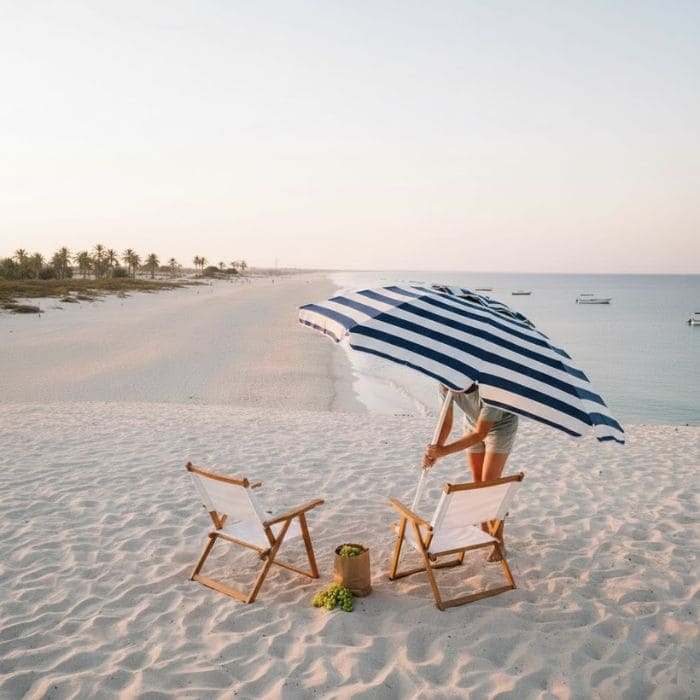
We didn’t bring much onto the beach, and that turned out to be perfect. We set up an umbrella for shade and placed two small folding chairs facing the water, far enough back to avoid the tide but close enough to hear the waves clearly.
We shared a bag of grapes we’d picked up along the road, knowing they wouldn’t last long in the sun, but enjoying them anyway.
Once the grapes were gone, the stillness made me restless in a good way. I started walking along the shoreline, scanning the sand, the trees, and whatever else the beach might offer. That’s when I noticed coconuts, some cracked, some intact, scattered farther up the beach where the tide couldn’t reach them.
Amanda joined me, and we gathered a few together, turning it into a small project without really planning to. Opening them wasn’t easy. We didn’t have tools, just curiosity.
After some trial, we found a sturdy piece of driftwood and used it to crack them open carefully. The sound alone felt satisfying. Fresh coconut water, warm air, bare feet in the sand. It was simple, unpolished, and unexpectedly perfect.
Making a Handmade Fishing Rod
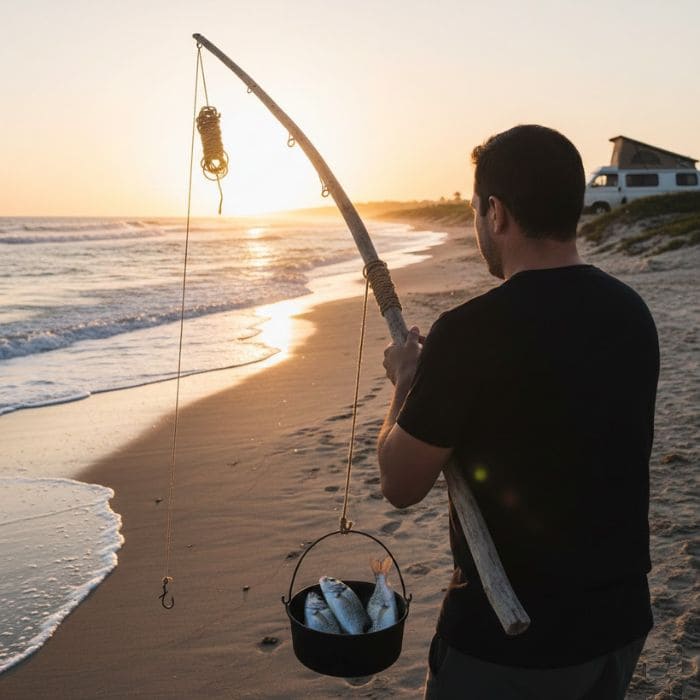
As the afternoon stretched on, we decided to try fishing using whatever we had.
We made a handmade fishing rod from basic materials: a straight piece of wood we found near the beach, a length of string we had packed in the van, and a small hook we’d brought along just in case. It wasn’t pretty, and it wasn’t precise, but it was functional.
We tied the line securely, tested the strength, and used small pieces of bait we had saved. Casting took patience, and we missed more than we caught at first, but slowly it started to work.
The Sea of Cortez is known for its variety of fish, and before long, we caught a few small ones, including corvina, sierra, and what looked like young snapper.
A Small Tip on Finding Bait When You Bring Nothing
One thing I didn’t expect was how easy it was to find bait once I stopped assuming the beach had nothing to offer.
A lot of people believe worms can’t live in sand, but that’s not completely true. They don’t live in dry, loose sand right by the water, but beaches are layered environments, and once you start looking more carefully, things change.
I walked a little farther inland, away from the tide line, toward areas where the sand darkened slightly and mixed with soil.
Near patches of low vegetation, driftwood, or places where moisture stays longer, the ground becomes firmer and cooler. That’s where life hides. Using a stick, I gently turned over the top layer of soil, not deep, just enough to see what was underneath.
Sure enough, I found small coastal worms, thinner than garden earthworms but active and strong. Some looked similar to sand worms and others resembled small marine polychaete worms, which are common near shorelines and are actually excellent bait.
They tend to stay in soil that hasn’t been disturbed much and where there’s no fertilizer or chemical runoff, which makes quiet, undeveloped beaches the best places to look.
The key is patience. Move slowly, turn the soil gently, and stop when you find signs of moisture or organic matter.
Once you spot one worm, there are usually more nearby. We only took what we needed, just enough for the line, and left the area as close to untouched as possible.
Evening by the Water
As the light softened toward evening, we grilled the fish near the van. The smell of salt, smoke, and fresh catch mixed into something that felt deeply satisfying after such an active day.
We ate slowly, hands sandy, clothes smelling like the ocean, talking about Sedona, the beach, and where the road might take us next.
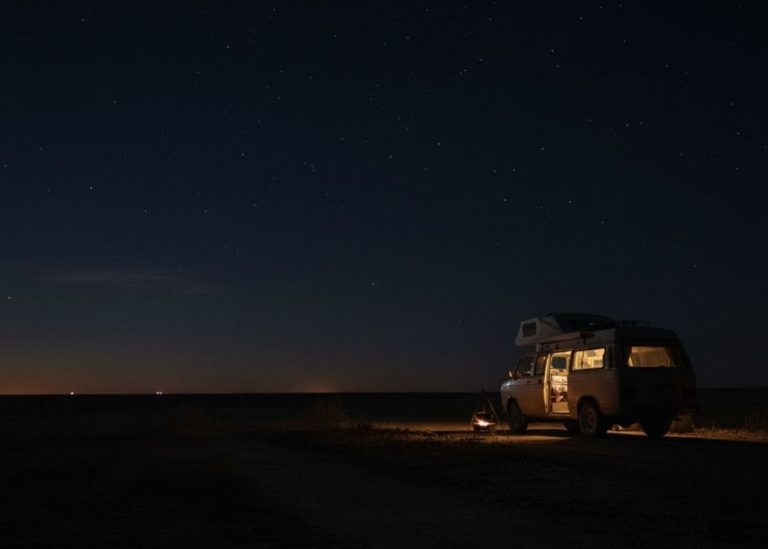
When night settled in, the beach became quieter still. The temperature dropped slightly, the water darkened, and the sky opened up above us.
Sitting there, full and tired in the best way, it became clear that this trip wasn’t about checking destinations off a list. It was about letting places meet us where we were, and allowing ourselves the time and space to fully live inside each moment.