Our Three Days Without Cellphones in the Wrangell–St. Elias Region
This time, Amanda and I didn’t accidentally lose service the way you do when a road gets remote and your phone simply gives up; we chose it on purpose, because we wanted to see what life feels like when the outside world stops tapping you on the shoulder every ten minutes. Reaching the Wrangell–St. Elias…
This time, Amanda and I didn’t accidentally lose service the way you do when a road gets remote and your phone simply gives up; we chose it on purpose, because we wanted to see what life feels like when the outside world stops tapping you on the shoulder every ten minutes.
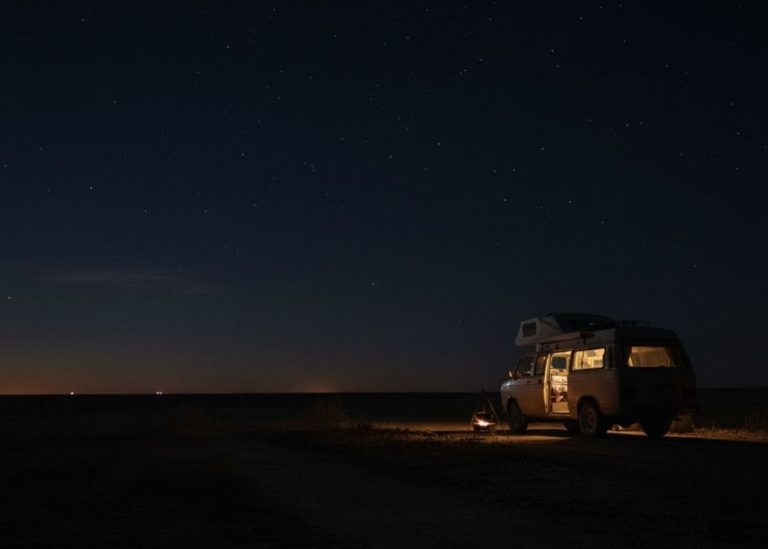
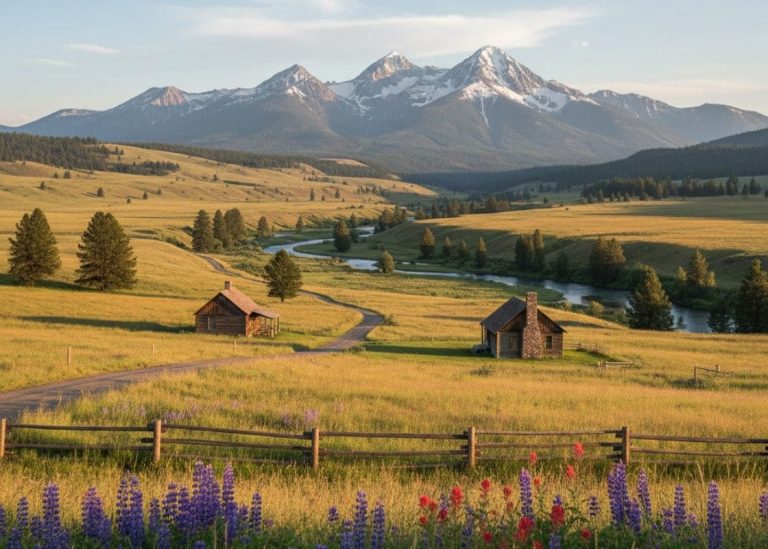
Reaching the Wrangell–St. Elias region took us about three days of driving, and those days felt different from our usual long hauls because the landscape gradually stripped itself down into something older and quieter, with big sky, long distances, fewer signs.
Wrangell–St. Elias is enormous, the largest national park in the U.S., and even when you’re still driving toward it, you begin to feel that scale pressing gently against your routine assumptions about comfort and convenience.
We ended up near Slana, a small community often used as a gateway to the park’s Nabesna side, and it immediately felt like the kind of place where time is something you notice through weather and daylight rather than notifications and schedules.
Amanda set her phone face down the moment the last bar disappeared, not dramatically, just quietly, like she was closing a door gently, and I remember thinking that our minds were going to reach for those screens out of habit for a while, even after the signal was already gone.
Meeting Eli Kaskinen, the Man Everyone Trusted
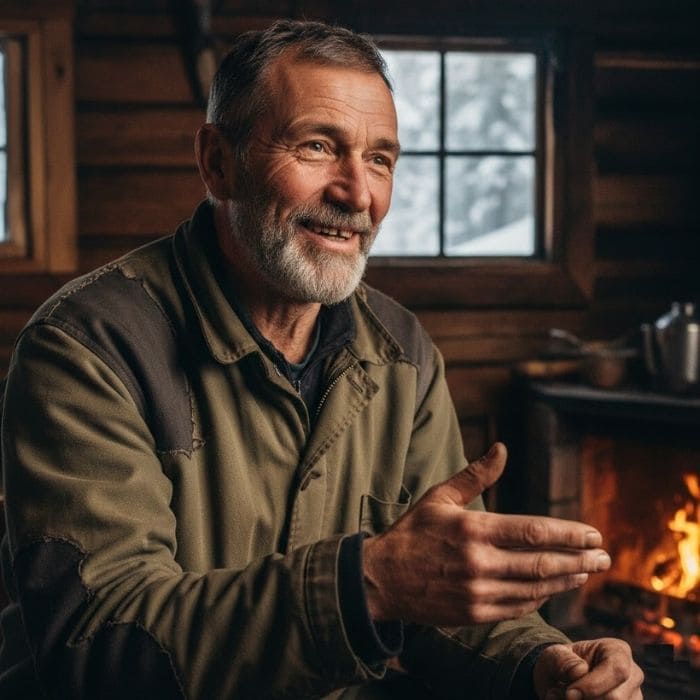
We met Eli Kaskinen. Eli was in his late fifties, lean in that weather-built way, with a gray beard trimmed short and hands that looked permanently familiar with rope, wood, and cold air, and he wore a faded canvas jacket that had been repaired more than once, the kind of jacket you don’t replace because it already knows your life.
When he looked at us, he didn’t do the whole wide-smile welcome you get in tourist towns, but his calm was immediately reassuring, because he had that steady, unhurried presence of someone who has solved real problems before and doesn’t feel the need to announce it.
When we told him we wanted to spend three days living without cellphones or outside news, he listened, nodded once, and said something that sounded almost too simple to be useful: “Then you’ll want a shelter that doesn’t argue with the wind.”
The Leaf Shelter That Shocked Us With How Well It Worked
I expected Eli to point us toward a campground or a cabin situation, but he led us to a spot that was slightly tucked into natural cover, where the ground felt a little more protected and the air moved differently.
He used spruce boughs first, the kind with dense needles that naturally create insulation and a soft, springy base, and then he layered broad leaves over the top, mostly birch leaves and cottonwood leaves, because they were everywhere in that area and they overlapped beautifully like shingles when placed the right way.
Alaska’s forests include trees like spruce, paper birch, and cottonwood, and seeing those familiar names turn into real shelter materials made my modern brain pause for a second, because I’m used to thinking of trees as scenery until someone shows you they’re also tools.
The structure itself wasn’t fancy, but it was smart, and that’s what made it impressive. Eli laid down spruce boughs to keep us off the cold ground, then built up layers so the shelter could block airflow instead of trapping it, and he kept adjusting the direction of the leaf layering so the wind wouldn’t lift everything like a loose blanket.
The whole time, he moved with the quiet confidence of someone who trusts the process, not because it’s magical, but because he has tested it in enough bad weather to respect it.
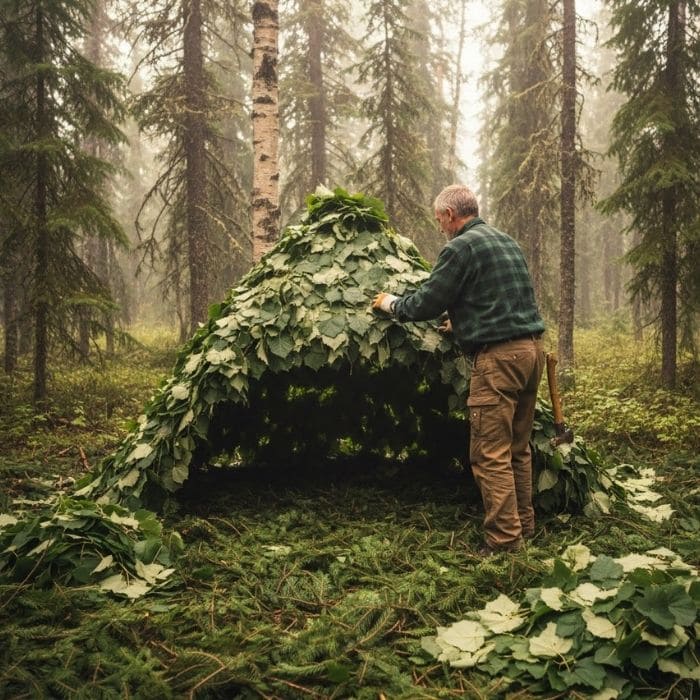
Amanda kept running her fingers along the leaf layers with this look on her face that was half admiration and half disbelief, and she whispered, “This is literally leaves,” like she needed to say it out loud to accept it as true.
We stayed in that leaf shelter part of the time, and I’m telling you honestly, the first night I expected it to feel flimsy, but it felt surprisingly stable and insulated, almost like the land was offering a temporary room as long as you built it with respect instead of impatience.
How the Locals Fed Themselves
I woke early on the second day, mostly because Alaska mornings make you do that when the air is crisp and the light comes in slow and clean.
I stepped out with a mug in my hand, still half warm from sleep, and he glanced over and said, “You’re up early enough to learn something,” which felt like an invitation and a challenge at the same time.
I’m going to say this carefully, because I’m not writing this to teach hunting or turn it into a how-to, and I also respect that hunting and trapping in Alaska are regulated and handled seriously, especially around park lands and subsistence traditions.
Wrangell–St. Elias has long-standing local subsistence practices, and the National Park Service has detailed rules about eligibility and regulations, so this is not something a visitor just casually copies.
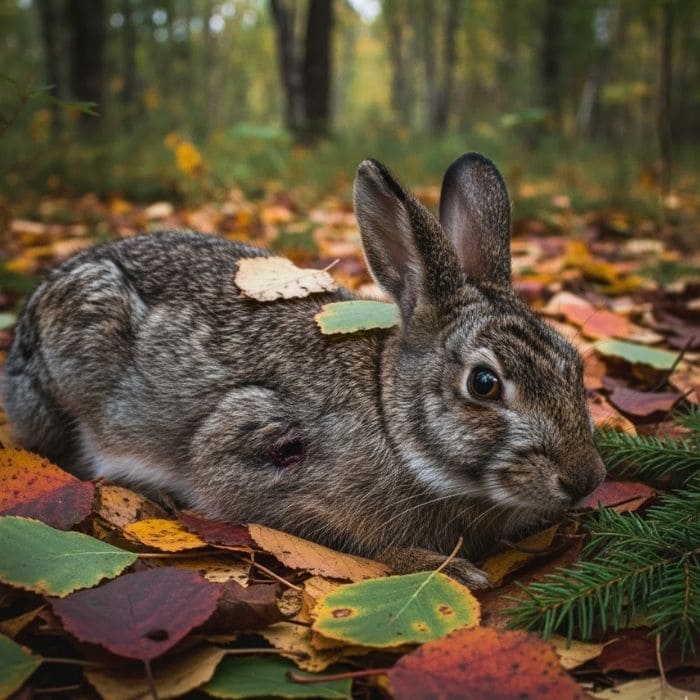
What I can share honestly is the part that changed my perspective, which was watching how the locals approached food with restraint and responsibility instead of excitement.
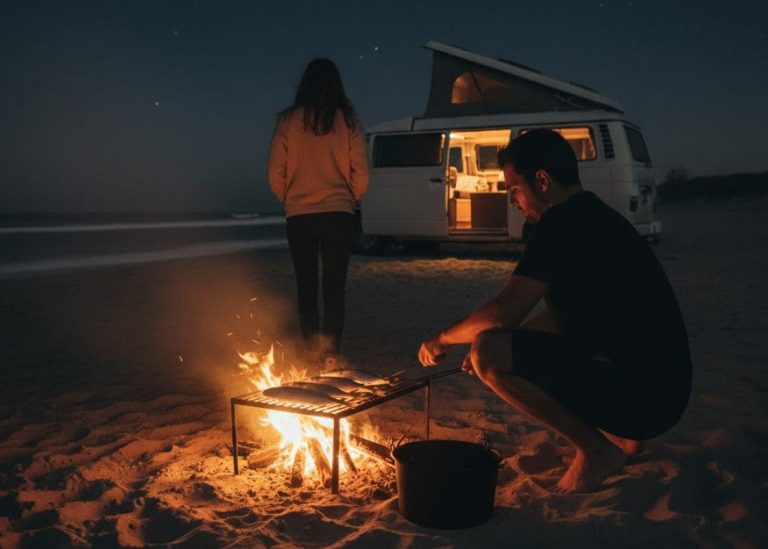
At one point, after we’d been out long enough that my fingers were numb around my cup and my mind had finally gotten quiet, we ended up with a rabbit as food for the day, and I remember feeling a strange mix of gratitude and humility, because in modern life you can forget what it means to connect a meal to work and waiting and responsibility.
Amanda’s Clear Autumn Story
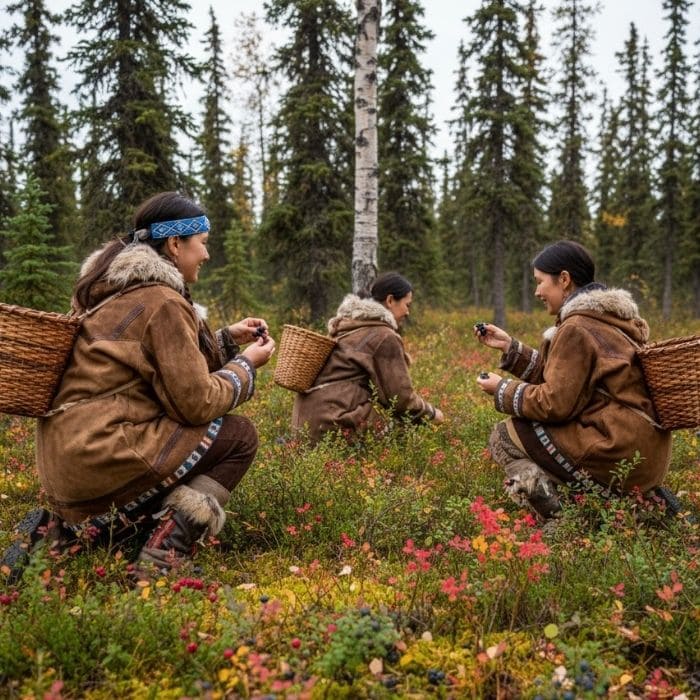
While I was with Eli that morning, Amanda was doing what she does best. The valley had that autumn look Alaska does so well, with muted grasses, cold light, and patches of color that pop unexpectedly, and the berries were part of that rhythm, because locals gather them in late summer into fall in many regions of Alaska.
Amanda spent the day with two local women, Maris and Lena, who treated berry picking like something halfway between routine and tradition, because it wasn’t only about taste.
They pointed out berries that are commonly gathered in Alaska, like blueberries, lingonberries (often called lowbush cranberries), and crowberries, and Amanda loved crowberries in particular because they looked simple and dark against the tundra-like ground cover, almost understated until you realize how common and useful they are in Alaska’s berry culture.
What made Amanda’s day feel real to me was how seriously she took local guidance, because she didn’t wander off picking whatever looked pretty, and she didn’t act like foraging was a cute activity, since in Alaska you learn quickly that plant knowledge is local and safety matters.
Learning Food Preservation Without a Fridge
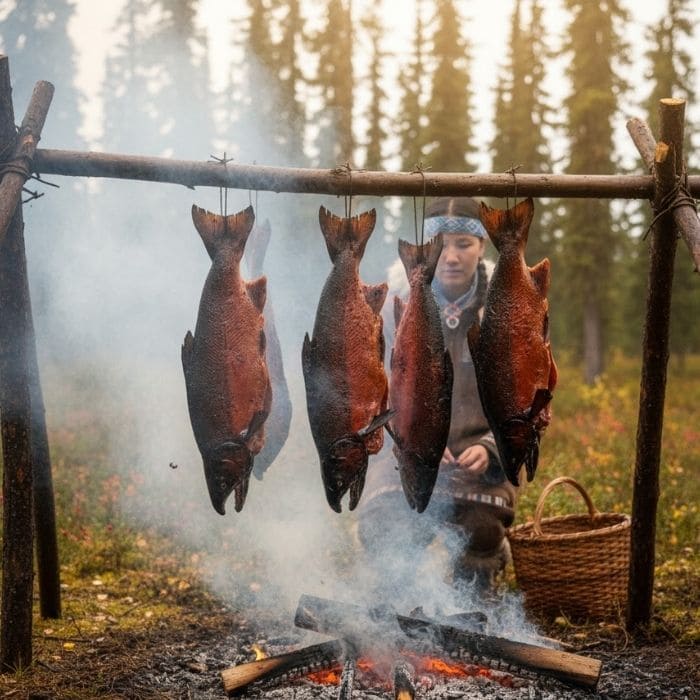
The most valuable lesson, and the one I’ll probably carry forever, was how they preserved food for months without relying on a refrigerator.
They showed us preservation methods that have been used in cold regions for a long time, especially drying and smoking, and the concept is simple even if the skill takes years: you reduce moisture, you protect food from spoilage, and you use airflow and controlled smoke as preservation tools rather than flavor alone.
In Alaska, people have long preserved fish and meat through smoking and drying, and seeing it done with patience and respect gave me a different kind of appreciation for the food itself.
What Three Days Without Outside News Did to Us
By the third day, I noticed something that felt almost embarrassing to admit, which was that I had stopped reaching for my phone even though it was still there, because the habit had already loosened.
The absence of outside news didn’t make me ignorant, it made me present, and I realized how often I carry the weight of the entire world on my shoulders through a glowing screen, even when I can’t do anything about it in that moment, and how much energy that drains without you noticing.
Amanda said she felt lighter, then laughed and admitted she also felt slightly feral in the best way, because eating simply, moving with daylight, and falling asleep to real darkness does something to a person that no wellness trend can replicate.