The First Night I Met the Stars in Organ Pipe Cactus National Monument
After Puerto Peñasco, we didn’t over-plan anything. We just pointed the van north, talked about how good salt air felt in our lungs, and let the road decide the pace. Organ Pipe Cactus National Monument wasn’t a place I’d ever visited before, and that alone made it feel like the right kind of next step….
After Puerto Peñasco, we didn’t over-plan anything. We just pointed the van north, talked about how good salt air felt in our lungs, and let the road decide the pace.
Organ Pipe Cactus National Monument wasn’t a place I’d ever visited before, and that alone made it feel like the right kind of next step. It had a reputation for night skies so dark they almost sound exaggerated, and the idea of stargazing out in the open desert felt like the kind of moment this lifestyle was built for.
The funny part is, the drive there was supposed to be straightforward. It turned into a lesson.
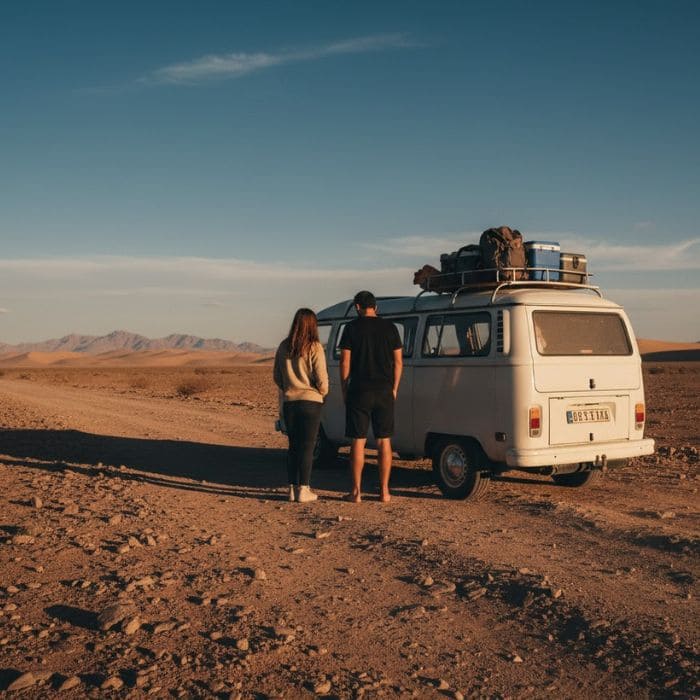
Somewhere along the route, my tire gave out. Not a gentle leak either, but the kind of blowout that instantly changes your mood and makes the van feel a lot less romantic.
One moment we were cruising and talking about constellations, and the next I was pulled over, hazard lights blinking, heat rising off the pavement, with Amanda looking at me like, “Okay, Mr. Adventurous, what now?”
Instead of arriving in a clean three to four hours, we lost a big chunk of the day waiting for help and getting back on the road. By the time we finally reached Organ Pipe, the sun was already dropping and my patience was running low, but the desert has a way of resetting you when you least expect it.
My tire tip:
I look for uneven wear, cracks on the sidewall, low pressure, and any nails or weird bulges that weren’t there before.
I also keep a real plug kit, a working jack, and a flashlight I can trust, because “I’ll be fine” turns into “I wish I’d checked” faster than you’d think when you’re far from a town.
First Look at Organ Pipe: Giant Cactus Everywhere
Organ Pipe doesn’t greet you with one single dramatic viewpoint. It surrounds you instead. The desert feels wide and quiet, and then you start seeing silhouettes that don’t look real at first: tall saguaros standing like sentries, organ pipe cacti rising in clustered columns, and layers of low desert plants spreading across the ground like living texture.
The saguaros were the first thing that grabbed me. They aren’t cute little cacti. They’re giants.
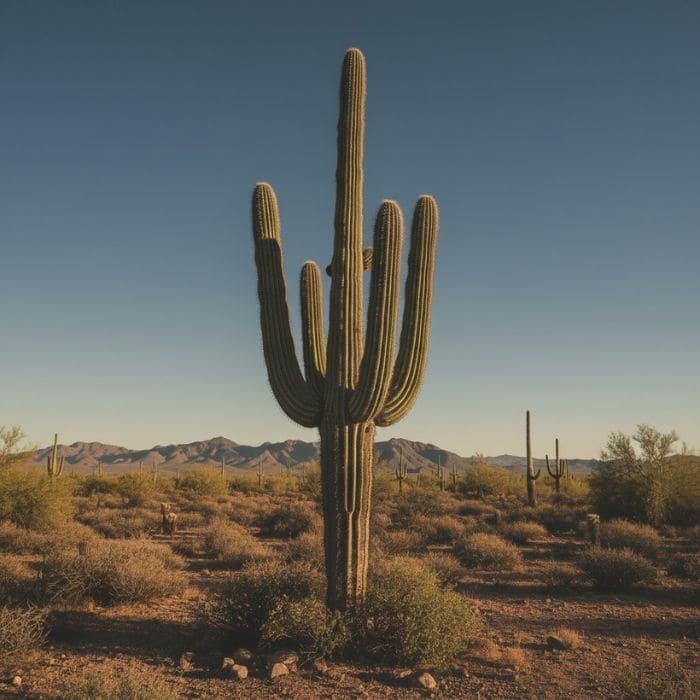
The National Park Service notes that saguaros can grow to around 45 feet, and the largest recorded reached 78 feet, which is honestly hard to process until you’re standing near one and realize it’s taller than many buildings.
Then there were the organ pipe cacti, which look completely different from a saguaro. Instead of one trunk, they rise in multiple tall pipes from the base, like a living bundle of columns. It’s the kind of plant that makes you pause, because it feels like it belongs in a different world.
Organ Pipe is also one of the darkest-sky places in the country, and even the park itself talks about how spectacular the night viewing can be out there, far from city glow.
If you drive through the monument, one of the iconic routes is the Ajo Mountain Drive, a graded one-way dirt loop that’s about 21 miles and typically takes around two hours, and it’s designed so cautious passenger cars can handle it, which tells you a lot about the terrain and the way this landscape demands respect.
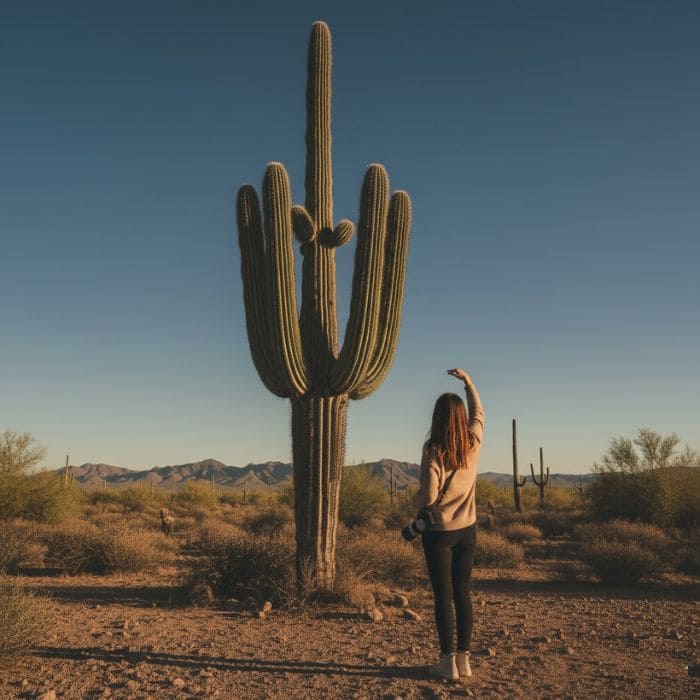
Amanda kept stopping to take photos, not even the posed kind, more like proof-for-later photos, because the shapes were so strange and bold against the fading light.
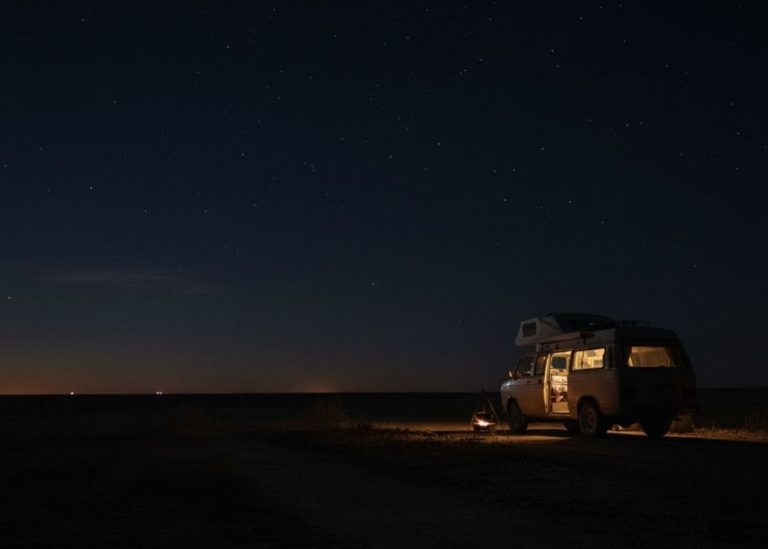
By the time we found a quiet spot and turned off the engine, the desert had gone still in that way only true open places can.
Our First Outdoor Stargaze
I used to think stargazing meant looking up for a few minutes, saying “wow,” then going back inside. This was different.
Organ Pipe has the kind of darkness that lets your eyes adjust slowly, and after a while, the sky stops being a flat black ceiling and starts looking like depth, like the universe has layers.
We waited for our eyes to settle into the dark, and that part mattered. The park even recommends using a red-tinted light and giving your eyes time to adjust, because night vision takes a while to fully kick in.
Amanda laughed when I turned on a tiny red light like I was some serious astronomer, but once the stars started multiplying, she stopped teasing and just sat quietly.
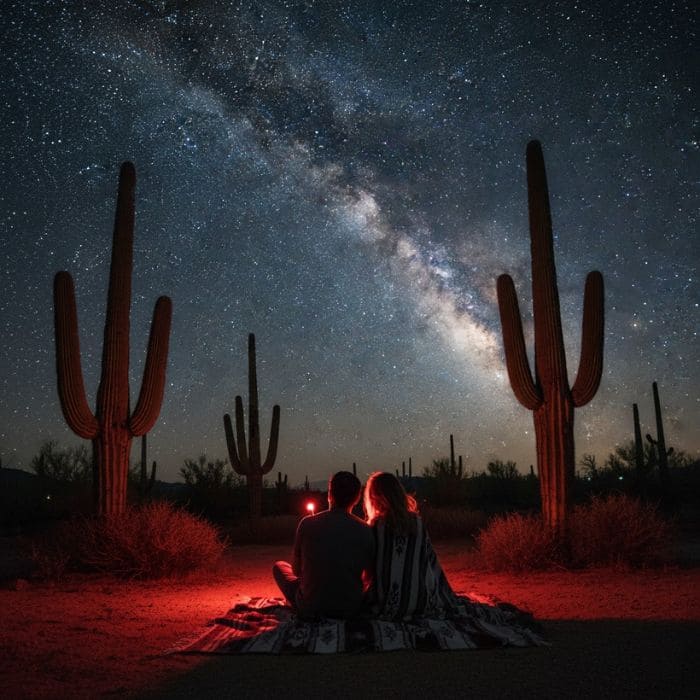
The sky felt huge. Not poetic huge. Actual huge, the kind that makes your problems look smaller without you trying. We didn’t have a telescope, just our eyes, a blanket, and the desert around us, with saguaros and organ pipes standing in silhouette like they were watching too.
If you’ve never been in a truly dark place, it’s hard to explain what changes. In a city, you see stars like scattered pins. Out there, you start noticing streaks, clusters, faint clouds of light, and the Milky Way becomes something you can actually understand as a presence.
The park notes that stargazing can be done year-round, and that May and June are peak times for viewing the Milky Way, especially near a new moon when the sky stays darkest.
Practical Stargazing Tips I’d Tell a Friend
This is what I’d do again next time, especially if it’s your first outdoor stargaze:
- Arrive before full dark so you can set up calmly and avoid fumbling around once it’s pitch black.
- Bring a red light or cover a flashlight with something red so you don’t ruin your night vision.
- Check the moon phase if you want the most stars and the best chance at seeing the Milky Way, because a bright moon can wash out the sky.
- Bring more warmth than you think. The desert can feel surprisingly cold at night compared to the daytime.
- Treat tires like safety gear, not like an afterthought. A few minutes of checking can save you hours of waiting and a whole lot of stress.
That night in Organ Pipe didn’t feel like a travel activity. It felt like a threshold moment, like the first time the road handed us a sky so clear it made everything else fall quiet, including the part of my brain that usually wants to plan the next thing.