The Kid I Can’t Forget From Joseph, Oregon
I don’t remember the exact date we rolled into Joseph, Oregon, and honestly that feels fitting, because we didn’t come here with a plan or a checklist. We were simply moving, following the kind of roads that don’t promise anything except a quieter drive, and Joseph appeared at the edge of the Wallowa Mountains like…
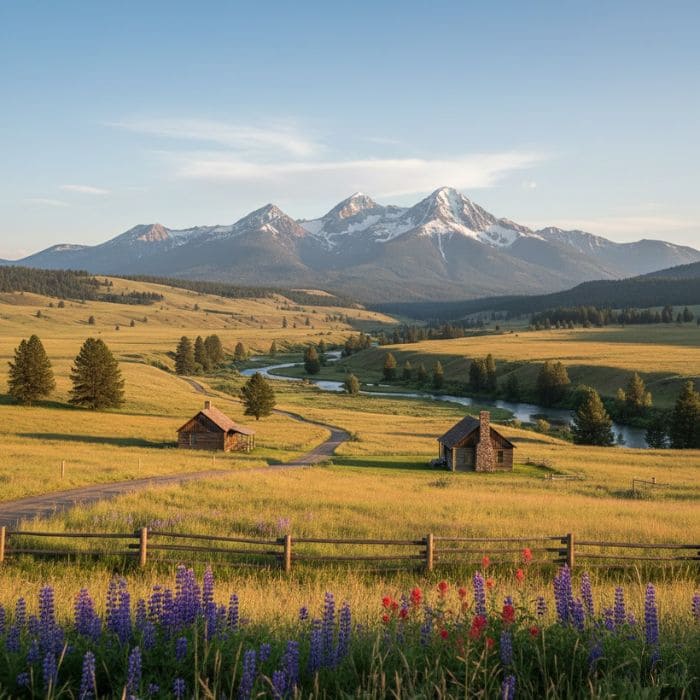
I don’t remember the exact date we rolled into Joseph, Oregon, and honestly that feels fitting, because we didn’t come here with a plan or a checklist.
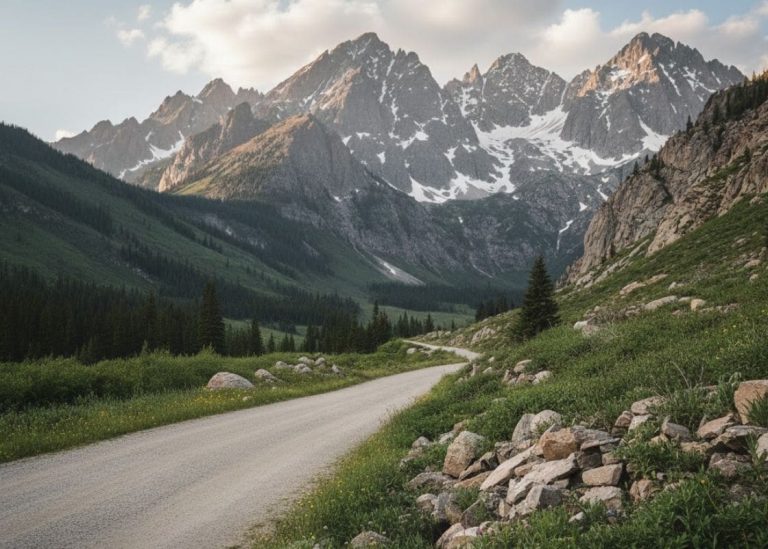
We were simply moving, following the kind of roads that don’t promise anything except a quieter drive, and Joseph appeared at the edge of the Wallowa Mountains like a place that wasn’t trying to be discovered, just trying to exist peacefully.
It wasn’t famous in the way people usually mean when they say “destination.” There were no big signs screaming for attention, no crowds, no must-do attractions that everyone posts online.
It felt like a small town that had learned how to live without needing to impress anyone, and maybe that’s why it hit me so hard. After so many places where everything is designed to be photographed, Joseph felt like a place designed to be lived in.
Amanda said, “This town feels like a deep breath,” and we decided to stay a little longer than planned, just one night at first, then another, until the idea of leaving quickly started to feel unnecessary.
The Oak Tree, and a Seven-Year-Old Who Looked Too Steady
Late that afternoon, we took a slow walk through a quiet neighborhood where the streets felt soft and unhurried, and that’s when we saw him.
A boy, maybe seven years old, standing under a large oak tree with a smaller child, about two, perched on his back like it was the most normal thing in the world. The little one had his arms looped around the older boy’s shoulders, his cheek pressed into the back of his shirt, half asleep, half watching the world.
He was staring at the ground near the oak’s roots, watching a line of ants carry crumbs through the grass.
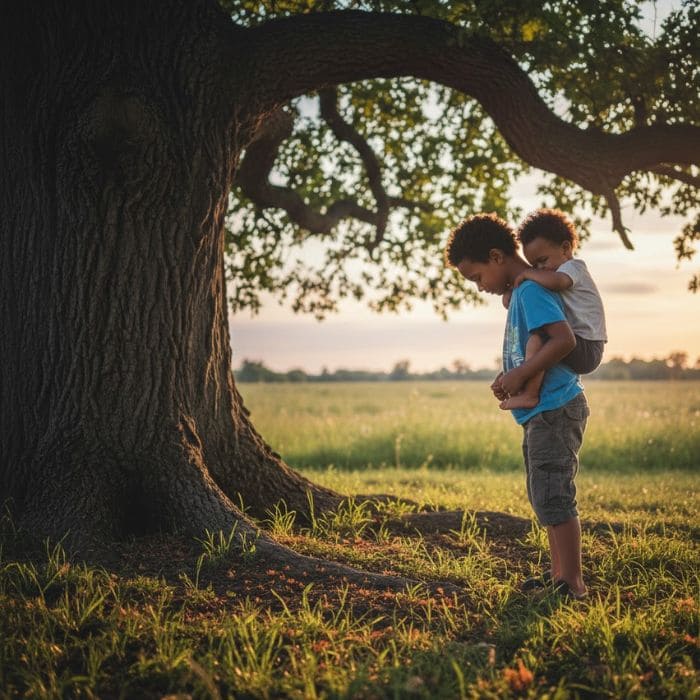
Amanda slowed down first, her eyes softening the way they do when she sees a child trying to be brave. The boy noticed us immediately, and instead of backing up or acting shy, he gave us a quick smile that felt practiced, like he had learned how to greet people politely even if his life wasn’t simple.
“Hi,” he said, bright and steady. “You’re not from here.”
I laughed lightly because he was right, and because the way he said it sounded more like an observation than a question. “What gave it away?”
He tilted his head toward the van parked down the road like it was obvious. “That thing,” he said. “People don’t drive those here.”
Amanda waved gently at the little one on his back. “Is he sleepy?”
The boy adjusted his grip in a careful, protective way. “He’s okay,” he said. “He gets heavy when he’s hungry.”
Then he looked at us again, like he had already decided we weren’t dangerous, and asked the kind of question kids ask when they’re curious but also trying to understand your place in the world.
“Are you travelers,” he said, “or are you running away?”
It caught me off guard, not because it was rude, but because it was honest. I glanced at Amanda, and she raised her eyebrows like she was thinking the same thing I was thinking, which was that this kid had already learned more about adults than most children ever should.
“We’re travelers,” I said. “We’re trying to live a little differently.”
He nodded like that answer made sense, then pointed toward a small house a short walk away. “My grandma’s house is there,” he said. “If you want water, you can come.”
Inside the Small House, and the Grandmother Who Smiled First
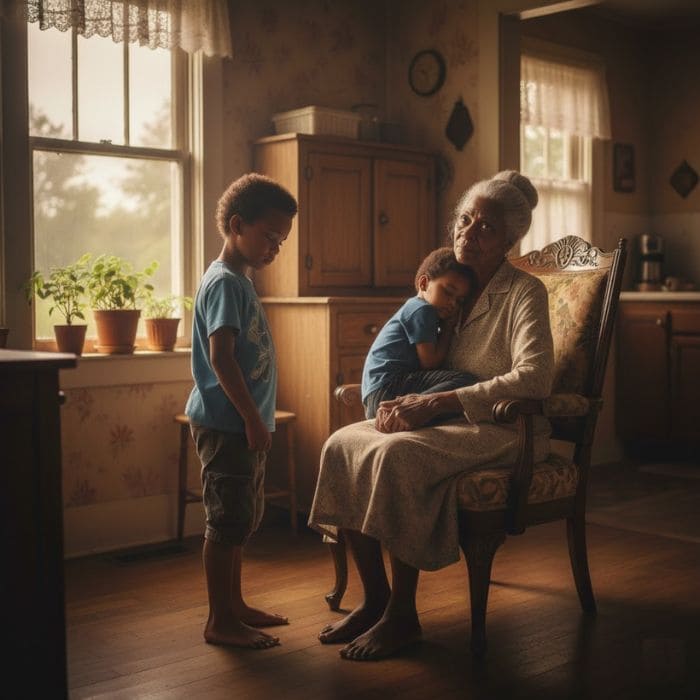
The house was small and worn in the way countryside houses often are, not neglected, just lived-in.
The porch steps creaked when we stepped up. A few potted plants sat by the door, stubbornly green, and there was a faint smell of cooking oil and old wood that reminded me of simpler kitchens.
Inside, we met his grandmother. She was ninety, thin and upright in a chair near the window, with silver hair pulled back neatly and eyes that were sharp enough to make you sit up straighter without meaning to.
Before I could introduce myself fully, she looked at Mike, then at the toddler, then at us, and smiled like she had already guessed the whole story.
“You brought guests,” she said, her voice calm and warm.
Mike stood a little taller. “They’re traveling,” he said. “They look tired.”
The grandmother’s smile didn’t fade, even when she asked the question that felt like it carried real weight. “How long have you been tired,” she said, looking at us like she was talking about more than a walk.
Amanda answered gently. “A long time,” she said.
What Happened to Mike’s Parents, and Why the House Felt So Quiet
We didn’t ask about Mike’s parents right away. It came out naturally later, the way hard truths do when a home is small and there’s nowhere for sadness to hide.
His grandmother spoke plainly, without trying to pull sympathy from us. Mike’s mother and father had worked in a mine, and they had died about a year earlier.
She didn’t describe it dramatically, and she didn’t cry while saying it, which somehow made it heavier, because you could tell the grief had already been lived through in the long, quiet way people grieve when there is no time to fall apart.
I watched Mike as she spoke, expecting his face to tighten, but he only pressed his lips together briefly, then looked down at his little brother and adjusted the toddler’s position like his body had decided the conversation required protection, even if the toddler didn’t understand a word.
Amanda’s eyes went wet, but she kept her voice steady. “I’m so sorry,” she said softly.
Mike looked up and said something I still hear clearly in my head. “They went to paradise,” he said, like it was a fact, not a fantasy. “They’d want us to stay together.”
Mike’s Real Life, the Work He Did, and the Pride He Carried
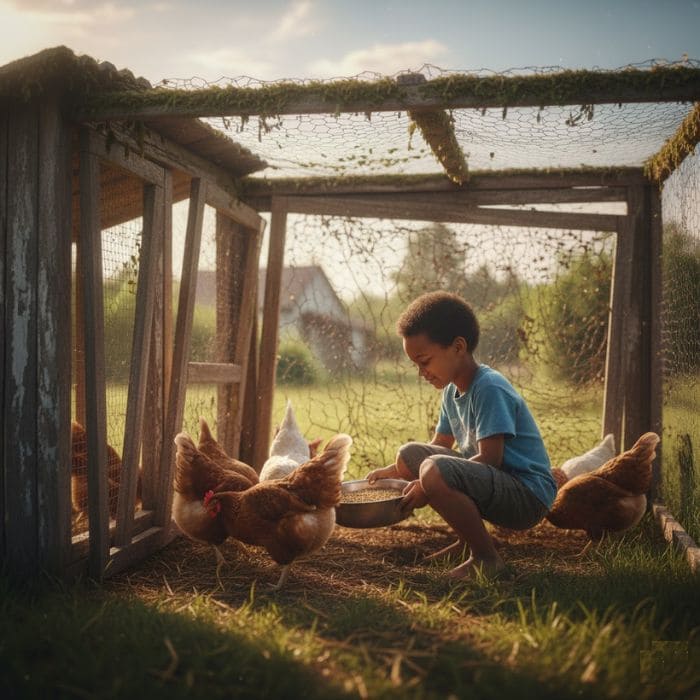
Over the next days, we saw what Mike’s life actually looked like, and what impressed me wasn’t that he was doing adult things. What impressed me was the care he put into everything, like he believed the people he loved deserved effort.
He raised chickens behind the house, a small flock that he managed with surprising discipline. He knew which ones were laying regularly. He knew which ones bullied the others. He knew how to patch the wire where the fence sagged, and of course he collected eggs.
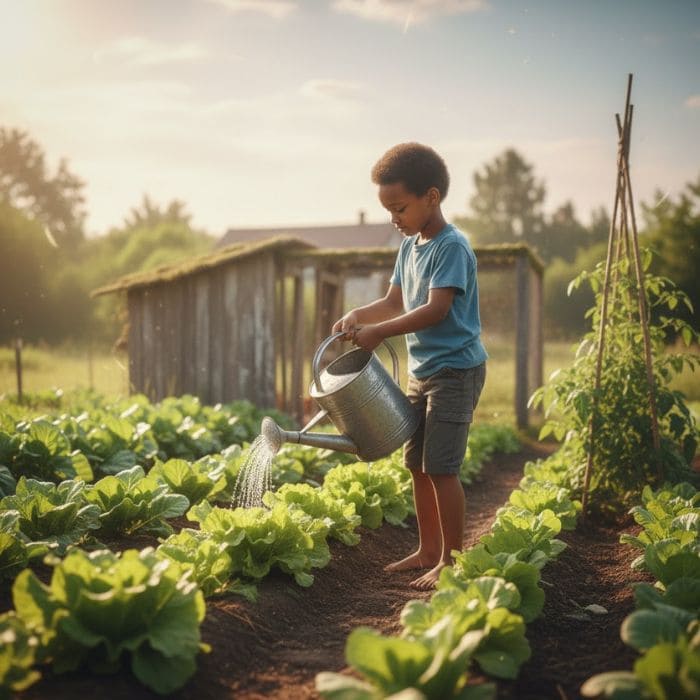
He also had a small garden, not a perfect one, but a practical one, with vegetables he could actually use.
The soil wasn’t rich the way fancy gardening books promise it should be, so he worked with what he had, adding scraps, pulling weeds, protecting seedlings with whatever he could find. It wasn’t pretty. It was real.
When the toddler cried, Mike didn’t get impatient. He shifted the child onto his hip, found a toy, warmed food, and kept doing what he needed to do in between.
I watched him comfort his grandmother too, in quiet ways that weren’t obvious unless you paid attention, like bringing her tea without being asked, or fixing her blanket before she noticed it had slipped.
One afternoon, I said, half joking, “You act like the man of the house.”
Mike shrugged like titles didn’t matter. “I’m just Mike,” he said. “I’m here.”
The One Gap He Couldn’t Hide

For all that capability, there was one thing Mike couldn’t fully mask, and it showed up when Amanda noticed a worn school notebook on a shelf and asked him about it.
He hesitated for the first time since we met him. “I can read,” he said quickly, then corrected himself in the same breath, like honesty fought its way out anyway. “I can read a little.”
His grandmother didn’t shame him. She simply looked toward the window like she was giving him space to tell the truth.
Mike admitted he struggled with reading and writing, and the way he said it wasn’t embarrassed in the normal kid way.
Amanda sat beside him at the table and asked if he wanted help, and he nodded immediately, like he had been waiting for someone to offer without making him beg.
That’s how our one night in Joseph quietly turned into a week.
Our Week With Mike, and What We Actually Did
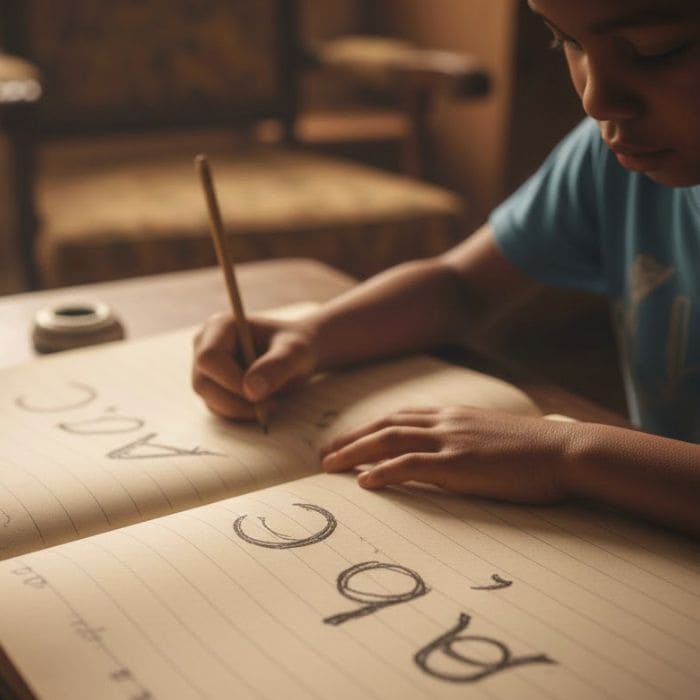
Amanda taught him every day, not like a strict classroom, but like a patient friend who refuses to let you feel small. She used small words first, then built outward, turning reading into something connected to his real life.
They read food labels together. They wrote down a list of chicken feed and supplies. They practiced spelling the names of vegetables in his garden.
When he got stuck, Amanda didn’t correct him harshly. She guided him until he found the answer himself, then celebrated the effort more than the result.
Meanwhile, I did what I naturally do when I see a house that needs help. I fixed what I could.
I patched a section of the fence that had been leaning. I tightened a hinge that squealed so loudly it probably woke the toddler every time the door moved. I repaired a loose board on the porch step.
The Goodbye, and the Money He Wouldn’t Take
When it was time to leave, I felt that familiar road tug, but this time it came with a heaviness, because it’s one thing to leave a beautiful place, and it’s another thing to leave people.
Amanda packed a small bundle of supplies we thought would help, and we decided to leave some money too, not as charity, but as support, because we were adults with resources and they were a family carrying a lot.
When I tried to give it to Mike, he stepped back immediately.
“No,” he said, firm but not angry. “We don’t take money.”
I tried to explain gently, but he shook his head again, then looked at his grandmother as if he needed her to see that he was doing the right thing. His grandmother smiled softly, proud in a quiet way that made my throat tighten.
Mike pointed toward the chicken yard and said, “We have eggs. We have the garden. I can work.”
Then he added something that made Amanda turn away for a second because she couldn’t hide her emotion fast enough. “You already helped,” he said. “That’s enough.”
As we walked back toward the van, I looked over my shoulder and saw Mike under that same oak tree, the toddler on his back again, one hand holding the little one steady, the other hand raised in a small wave, and I remember thinking that Joseph, Oregon didn’t become unforgettable because of the mountains.