Three Days We Can’t Forget Living Among a Quechua Community
The idea of staying with a Quechua community started as a quiet note in the back of my mind, the kind you don’t act on right away because it feels too big and too important to rush. After weeks of living on the road, something kept tugging at me. We’d seen landscapes that looked unreal,…
The idea of staying with a Quechua community started as a quiet note in the back of my mind, the kind you don’t act on right away because it feels too big and too important to rush.
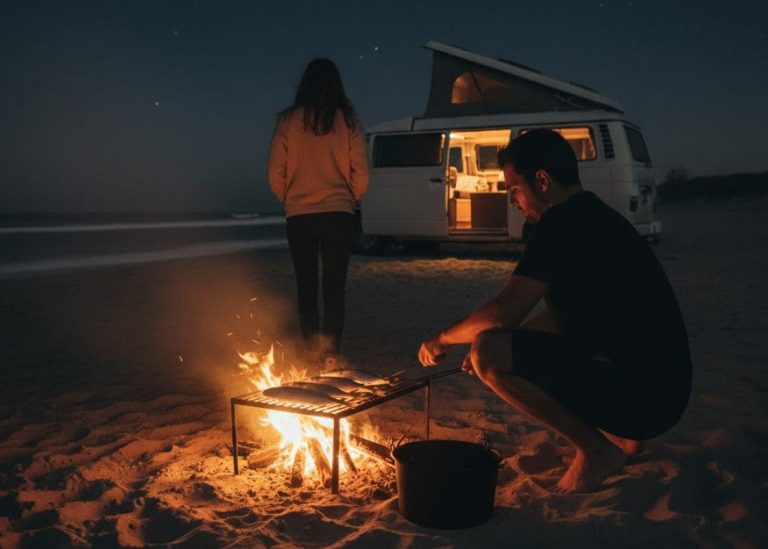
After weeks of living on the road, something kept tugging at me. We’d seen landscapes that looked unreal, we’d slept under skies full of stars, and we’d eaten meals cooked in our van with sand still on our shoes, but I kept wanting something deeper than scenery.
I wanted to understand how people live when their lives are built around land, seasons, and community instead of schedules and screens. So we chose the Sacred Valley area, partly because it’s one of the heartlands of Quechua life, and partly because October felt like the right season to arrive.
The Road In: October Light, Big Valleys, and Fields That Look Hand-Stitched
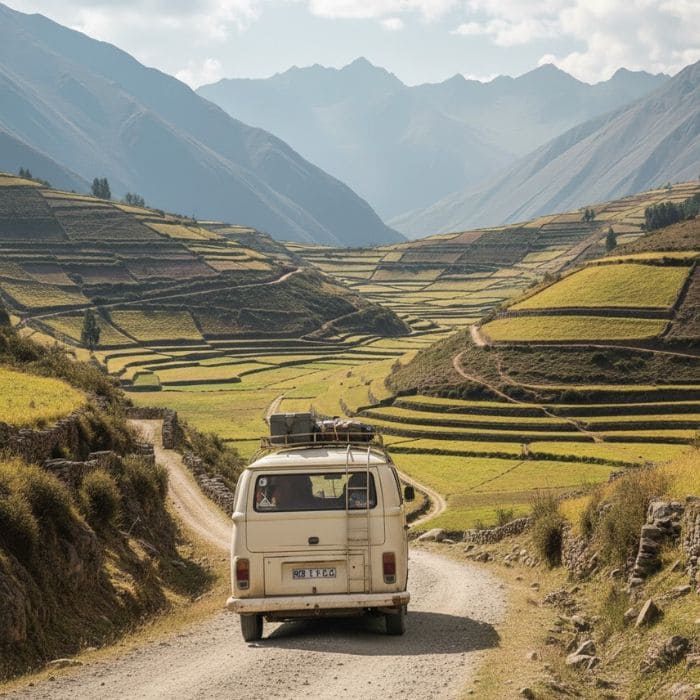
Reaching the Sacred Valley area in October felt like arriving at the exact right moment in the calendar. Days were comfortably mild, and the nights cooled down fast once the sun dropped, which made mornings feel crisp and afternoons feel golden.
Travel guides for the region describe October around Cusco and the Sacred Valley as mild during the day with cooler nights, and that matched what we felt in our bones while stepping out of the van in the early hours.
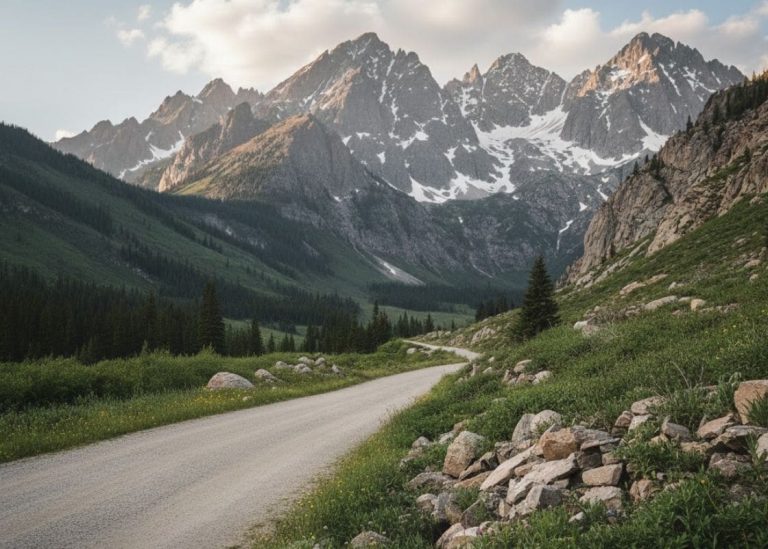
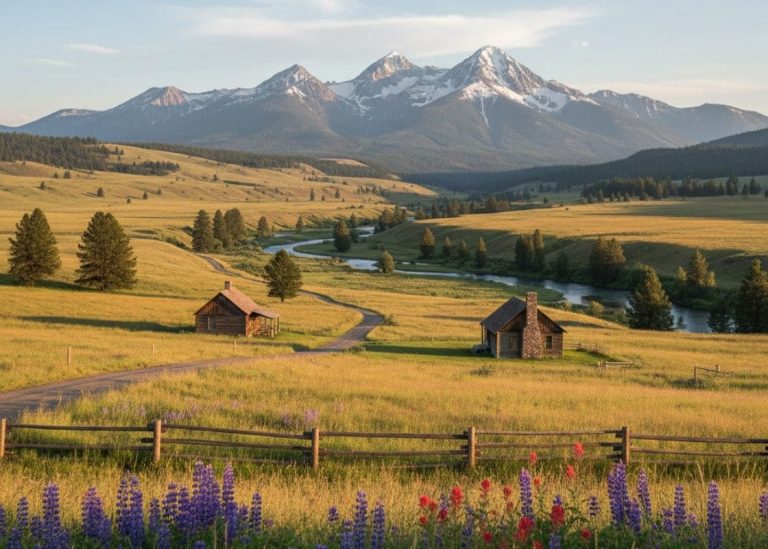
The drive itself was part of the magic. The valley opened and closed as the road curved, and on both sides you could see farmland climbing the slopes in long bands and patches, like someone had quilted the mountains with greens and soft browns.
The higher we went, the more the air seemed to thin and sharpen, and the landscape started to look deliberate in a quiet way.
Stone borders framed small plots, paths cut through fields at angles that made sense to people who walk them every day, and the mountains stood so close they felt less like scenery and more like guardians.
What surprised me most was how alive the land looked even when it seemed still. You’d notice a few animals moving slowly in the distance, smoke rising from cooking fires, and small clusters of homes tucked into the slope, built low and practical, designed for a place where weather and altitude are always part of the conversation.
Day 1: Potato Harvest, Big Fields, and a Lesson in Why This Land Grows Food So Well
On our first day, we stayed in the van, not because anyone asked us to, but because it felt respectful to arrive gently and learn the rhythm before stepping too far into it.
Later that morning we joined local farmers for a potato harvest, and that was the moment everything stopped feeling like travel and started feeling like being allowed into real life.
The fields were larger than I expected, stretching outward in wide, uneven rectangles that followed the land rather than forcing it into straight lines.
The soil looked dark and crumbly in places, and it held just enough moisture to stay cool under the surface without feeling muddy. That makes sense in the Andes, because potatoes thrive in the highlands and are traditionally grown across high-altitude zones where the climate and microclimates support them.
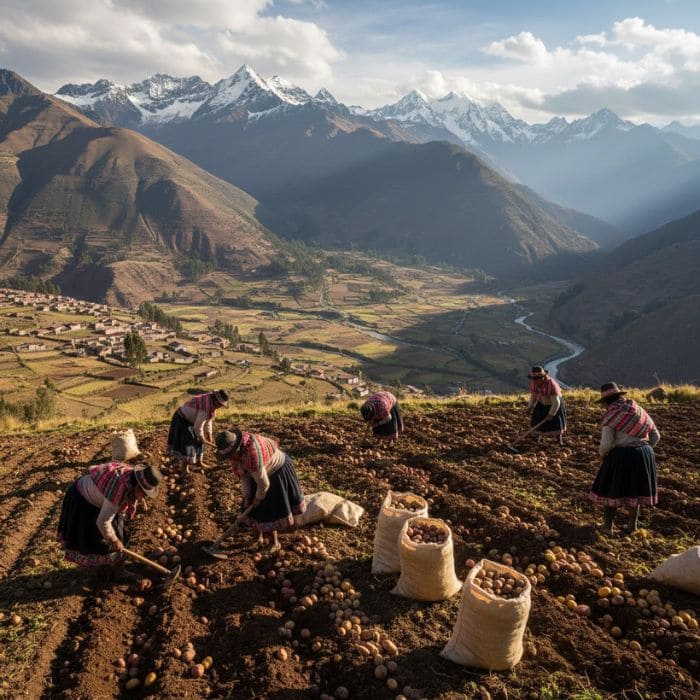
The work itself had a steady rhythm. People moved in lines and small clusters, loosening soil and lifting plants with tools that looked simple but purposeful.
Some used foot-powered techniques and hand tools that let them work around the plant without destroying what’s underneath, and the whole process felt like experience passed down rather than instructions read from a pamphlet.
We didn’t only see potatoes, either. In the same area, you notice other crops tied into daily life: corn from the Sacred Valley is famous for its oversized kernels, and corn cultivation is deeply rooted in the valley’s agricultural history.
You also hear about quinoa and barley in everyday meals and local cooking, because these highland crops show up alongside potato fields and village food traditions.
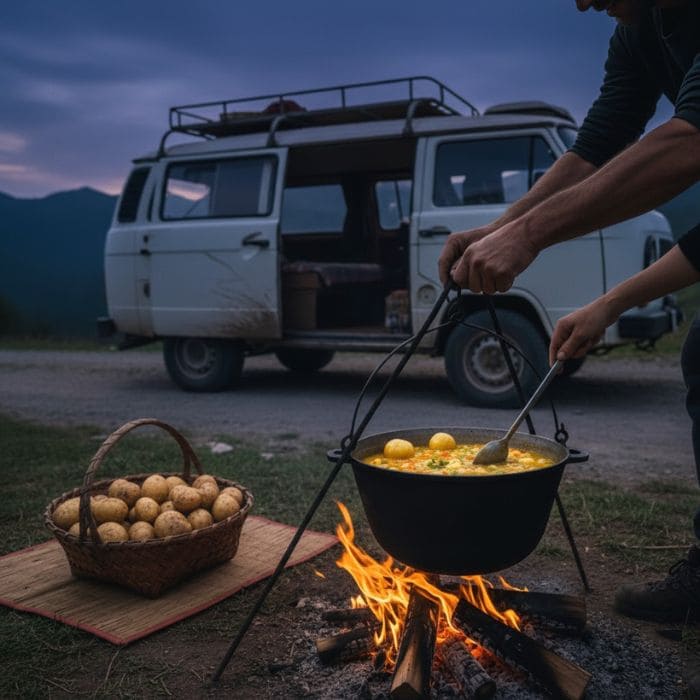
At the end of the harvest, they gave us potatoes, not as a souvenir, but as a real share. That gesture hit me harder than I expected because it said, in the clearest way, “You worked with us, so you eat with us.”
That night, the van became our tiny kitchen again, and we made potato soup. The potatoes were nothing like the uniform ones from a grocery store.
Here, you can hold three potatoes in your hand and each feels like it came from a different planet: different skins, different colors, different textures. Peru is known as a center of potato diversity, and the Andes hold an extraordinary range of varieties, which becomes very real when you’re sorting them on a small van counter.
Some turned creamy fast, others stayed firm longer, and the flavor was earthier and fuller, like the soil was still speaking through them.
Day 2: Meeting the Quispe Family, Wearing Traditional Clothing, and Huacatay at Dinner
By the second day, we stopped feeling like strangers passing through. We met a family on the west side of the village, and for the sake of this story, I’m going to call them the Quispe family because that’s how they introduced themselves to us, warmly and directly, with the kind of confidence that makes you relax.
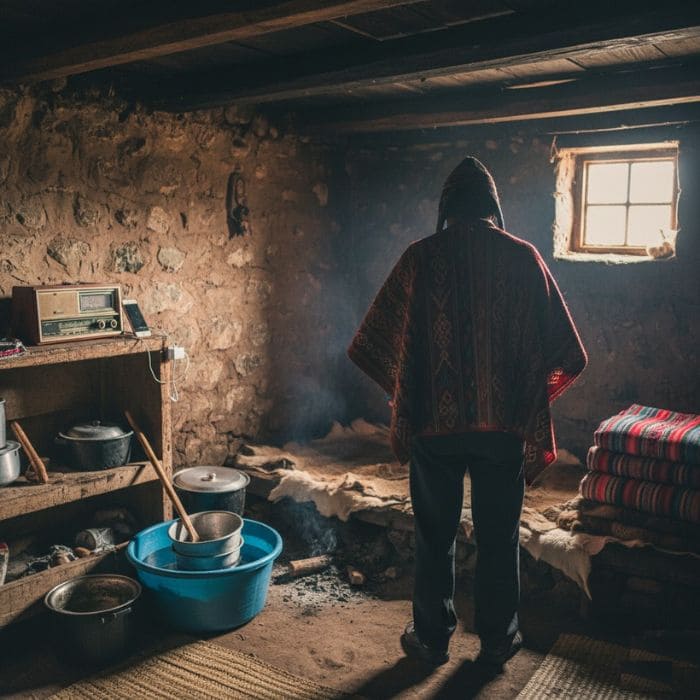
Don Martín Quispe and Señora Elvira lived with their children and an older relative, seven people in total, and their home was the clearest example of what I mean when I say “traditional, but close to modern life.”
The structure felt rooted and practical, with thick walls and a layout designed for family life, warmth, and work, yet inside you’d also spot modern touches that didn’t feel forced: a radio playing softly, a phone charging near the corner, a plastic tub for washing, simple cookware that looked like it had been used a thousand times, and blankets folded with care rather than decoration.
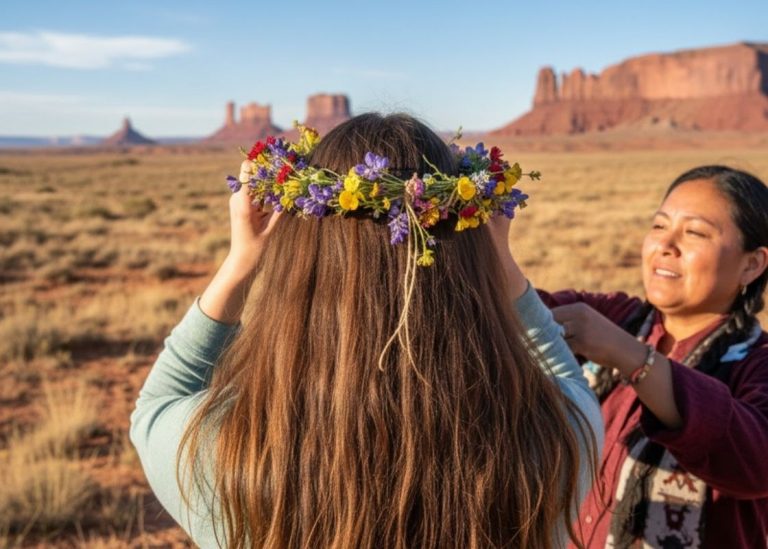
They invited us to try on traditional clothing, and it didn’t feel like a performance. It felt like the way family members include you, gently teasing you while also helping you get it right.
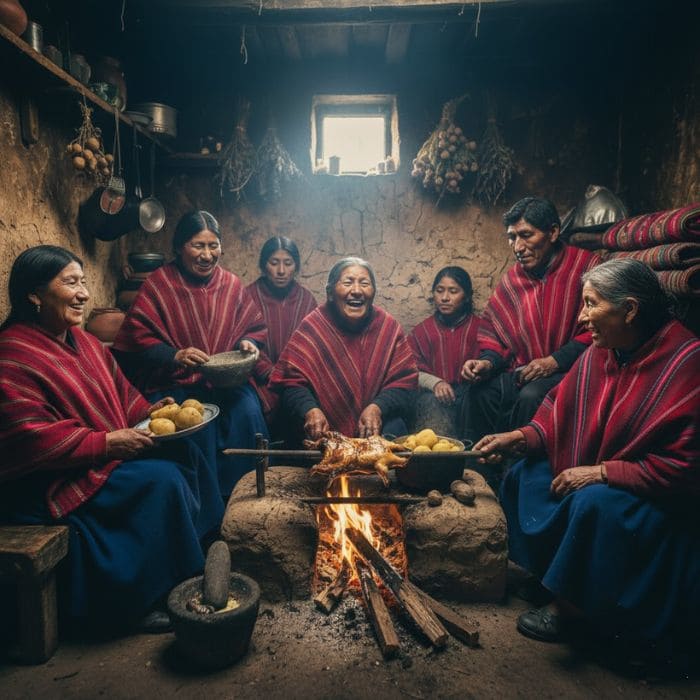
That evening, they cooked cuy and seasoned it with huacatay, the herb they described with pride like it carried a story of its own.
Huacatay is widely used in Peruvian cooking and is often described as Peruvian black mint, and it shows up in sauces and marinades with a bold, herbal flavor that’s hard to confuse with anything else.
It cut through the richness of the meal in a way that made the food feel bright, not heavy, and I understood why people treat it like a signature ingredient rather than just seasoning.
And of course, on our next trip we were sure to bring them away.
Day 3: The Communal House, How It’s Built, and Why It Matters
On the third day, we visited the communal house, the place where community life gathers itself. It was the village’s shared living room and decision room at the same time, a space used for meetings, planning, and community events, the kind of place that holds stories simply by existing.
The building itself made sense for the land. In the Andes, traditional construction often uses local materials like stone and adobe, with thick walls that help manage cold nights and shifting temperatures.
You could see the logic in every detail: sturdier materials where wind hits hardest, simple wooden supports, and a layout that prioritizes gathering, storage, and warmth rather than open space for its own sake.
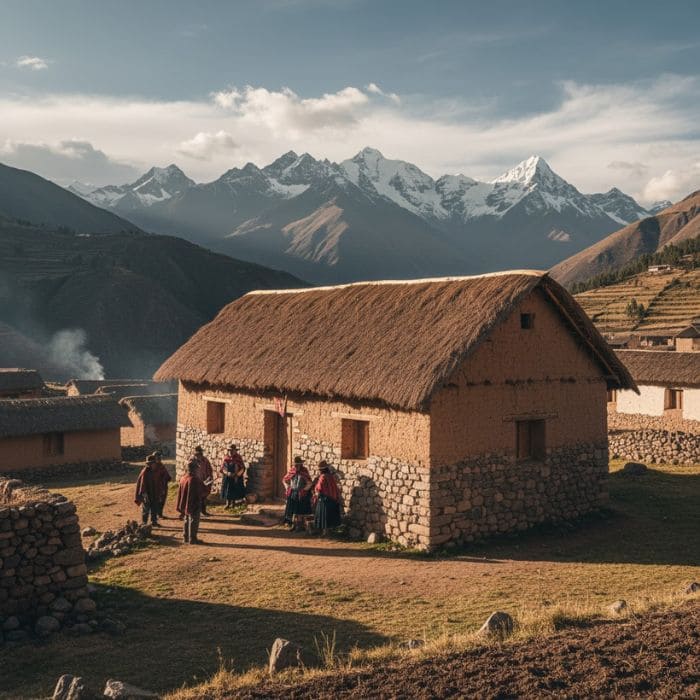
What I loved was how the communal space wasn’t only practical, it was social. People came in and out, greeting each other, bringing small items, talking about the day.
Someone began pulling out textiles, and it clicked why weaving is so central in many Quechua communities, because it’s not only craft, it’s time together, it’s conversation, it’s identity held in pattern.
Smithsonian stories about Quechua weaving describe it as social and communal, with family members gathering as work begins, and that’s exactly how it felt in the room, like skill and community were inseparable.
Amanda and I joined in the simplest ways we could: listening, asking careful questions, helping where it made sense, and mostly staying present.
By the afternoon, I realized something uncomfortable and honest. I didn’t want to leave. Not because I wanted to pretend this was my life, but because it felt rare to be in a place where community still shows up in daily routines, where people share work, share food, share space, and do it without turning it into a concept.
When we finally walked back to the van that evening, the mountains looked the same, the sky looked the same, but we didn’t feel the same. Three days had been enough to shift how we understand richness, and it wasn’t tied to money at all.