You Must Try Kayaking Havasu Creek
The first time I heard the name Havasu Creek, it sounded like one of those places people use as a flex, a destination that’s more about bragging rights than experience. The photos online didn’t help, because the water looked almost unreal, that bright turquoise you only trust when it’s coming from a filter. Then we…

The first time I heard the name Havasu Creek, it sounded like one of those places people use as a flex, a destination that’s more about bragging rights than experience. The photos online didn’t help, because the water looked almost unreal, that bright turquoise you only trust when it’s coming from a filter.
Then we went, and I understood immediately why people talk about it with that slightly stunned tone, like they still don’t fully believe what they saw.
We were in Arizona, already used to red rock and dry wind, and that’s exactly why Havasu Creek hit so hard. Water like this should not exist in a canyon this dry. Yet there it was, threading through the desert like a secret.
Planning the Day Like We Actually Wanted to Enjoy It
We didn’t treat this like a casual stop, because nothing about getting to Havasu Creek is casual. It’s remote, it’s protected land, and it’s the kind of trip where being unprepared doesn’t just ruin your day, it can create a real problem.
The night before, Amanda and I repacked our gear in the van and made it simple, because heavy bags in desert heat are misery. We brought:
- two refillable water bottles each and electrolyte packets
- sunscreen, hats, and lightweight long sleeves
- a small first-aid pouch, mostly for blisters and scrapes
- a dry bag for phones, keys, and cash
- snacks that won’t melt, nuts and a couple of bars
- a thin microfiber towel
We also did something I’m slightly obsessive about now: we checked straps, buckles, and anything that keeps gear secure. A canyon is not the place to realize your dry bag clip is loose.
The First Look at the Water
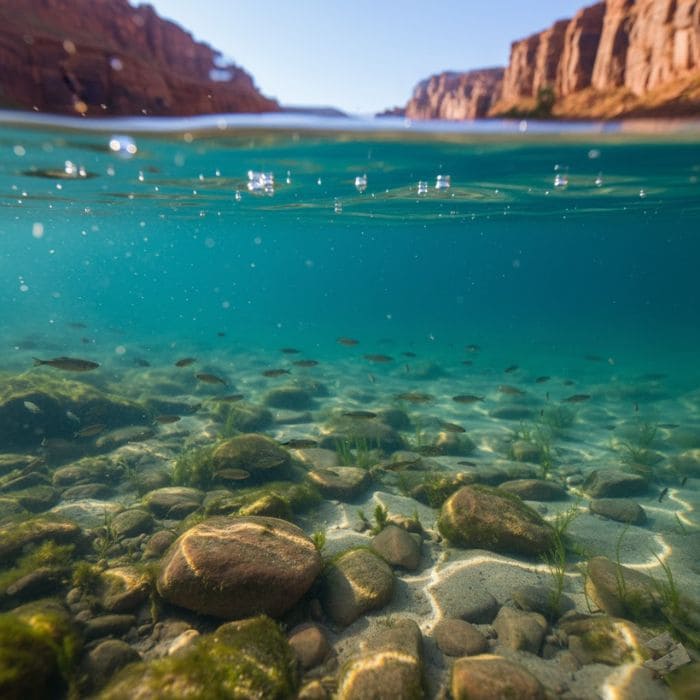
When we first reached the creek, the color honestly stopped us. We stood there without talking for a moment, because my brain was trying to reconcile what it expected with what it was seeing.
The water wasn’t just blue. It was that milky turquoise that looks like it belongs in the Caribbean, except it was surrounded by red canyon walls and pale sand. In some shallow sections, it looked almost glassy and transparent, and in deeper sections it turned richer and brighter, like liquid stone.
Amanda crouched down and dipped her fingers in, then pulled her hand back quickly because the water was colder than it looked.
“This is freezing,” she said, laughing, shaking her hand dry.
That coldness was part of what made it feel real. Cold water in the desert is always shocking, but it also feels clean, like a reset.
Launching the Kayak, Step by Step
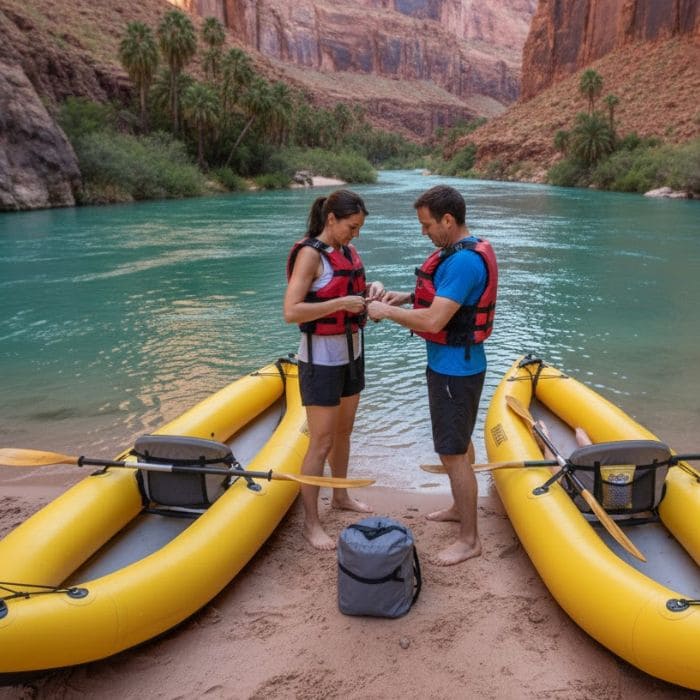
Kayaking here wasn’t an impulsive “let’s jump in.” We took our time and set up like we were respecting the place.
We checked our life vests, tightened the straps, and balanced our weight in the kayak so it wouldn’t tilt when we pushed off. Amanda put the dry bag between her feet, and I tucked snacks into a side pocket where we could reach them without digging.
The launch area was shallow, with smooth stones underfoot, and I remember how the stones felt rounded and cool, like they had been polished by the creek for years. When we pushed the kayak forward, it slid into the water with almost no resistance, and suddenly we were floating over that impossible color.
What the Creek Felt Like From the Middle
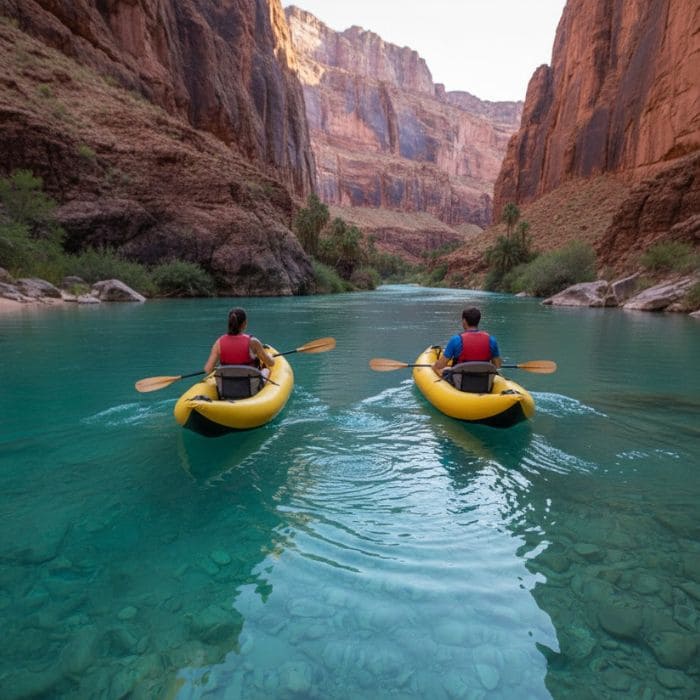
From the center of the creek, the color became even more intense. Looking straight down, I could see the creek bed clearly, pale stones and sand patterns, small fish darting away in quick shadows.
The water wasn’t cloudy. It was clear enough that you could watch your paddle blade slice into it and see the ripples move outward like rings of light.
The canyon walls weren’t always towering straight up. In some places they narrowed close to the water, creating shade that turned the creek a deeper blue-green. In other places, the canyon opened and sunlight poured in, and the water brightened again like it was glowing from inside.
Every bend changed something. The temperature in the air shifted slightly depending on shade. The sound of the creek changed depending on how the water moved over rocks. Even the wind felt different, cooler near the water and dry again the moment we drifted toward shore.
Amanda paddled steadily, and I could tell she was doing that thing she does when she’s trying to memorize a moment. She kept turning her head to look at the walls, the plants clinging to the banks, the way the sunlight hit the surface.
At one point she said, quietly, “This is the first time in a long time I feel like my brain is completely silent.”
Out on the road, we see a lot of beautiful places, but not many places actually quiet your mind in real time. Havasu Creek did.
The Details That Made It Feel Alive
What made the creek special wasn’t just the color. It was the contrast. You’d look up and see dry rock, baked sand, desert plants holding on stubbornly, and then you’d look down and see water that looked like a tropical lagoon.
In some areas, green vegetation hugged the banks, reeds and small plants thriving because of this thin ribbon of water that kept them alive.
We passed sections where the water moved faster over rock, creating a soft rushing sound, and then sections where it slowed and became so still that the surface reflected the canyon like a mirror.
I recommend you stop a few times just to float. No paddling, no talking, just letting the current carry you slowly while you watch the scene move around us.
Getting Out, Feeling the Cold, and Laughing Like Kids
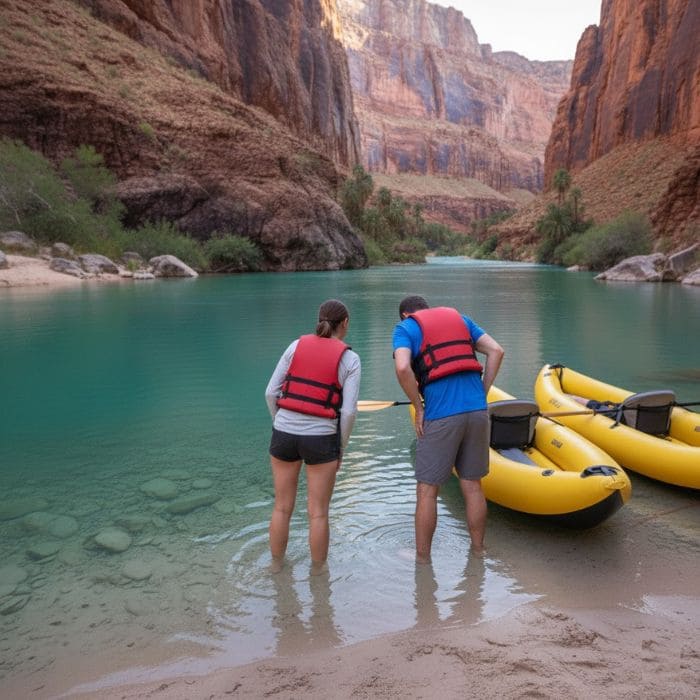
Eventually we pulled into a shallow area and stepped out to stretch our legs. The cold water hit my ankles like a shock. It wasn’t painful, but it was intense enough that I inhaled sharply and then laughed, because it felt good in that honest way cold water feels good.
Amanda stepped in beside me, and she immediately grabbed my arm, half laughing, half pretending she was mad at me for suggesting this in the first place.
“I can’t feel my feet,” she said.
We stood there for a while, letting the cold sink in, watching small ripples move around our legs, looking back at the kayak resting in the shallows like it was part of the scene now.
Why This Place Stayed With Me
When we finally got back in and paddled again, I realized something: kayaking Havasu Creek didn’t feel like sightseeing. It felt like participation. You had to earn each view with effort, stroke by stroke, and that made the beauty feel deeper.
Later, when we sat on the bank to eat snacks and dry off, we didn’t rush to leave. Amanda kept staring at the water like she was trying to store the color somewhere in her mind for winter days when everything feels gray.
And I understood why. Because Havasu Creek isn’t just a place you visit. It’s a place that makes you question what you thought was possible in the middle of a desert.